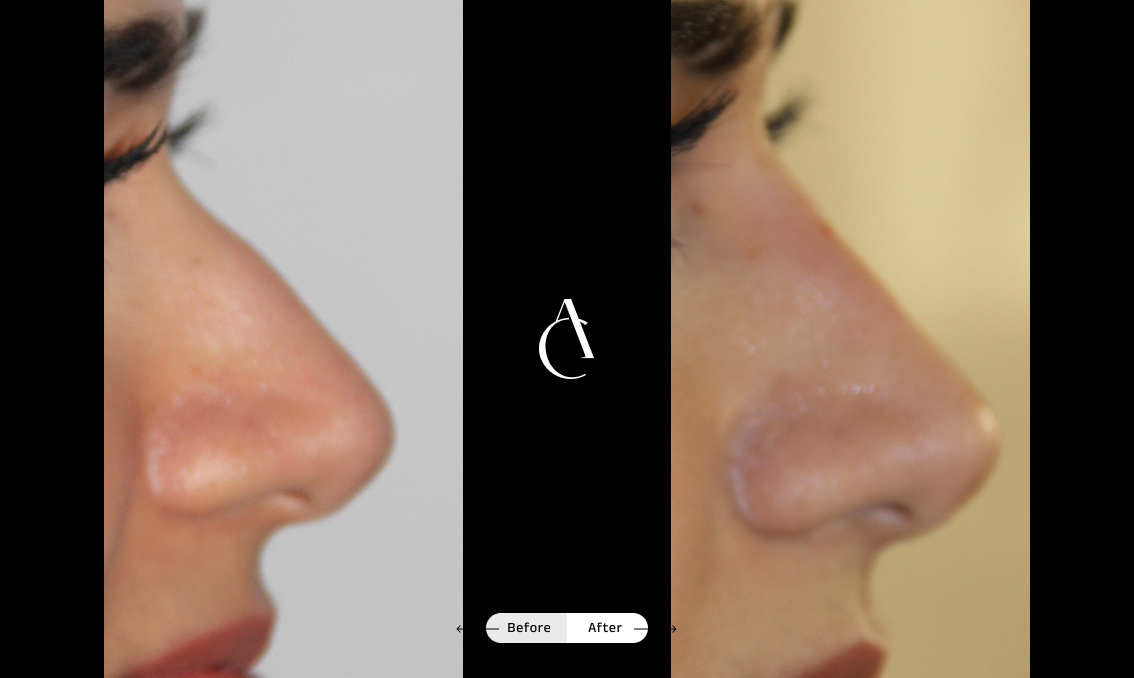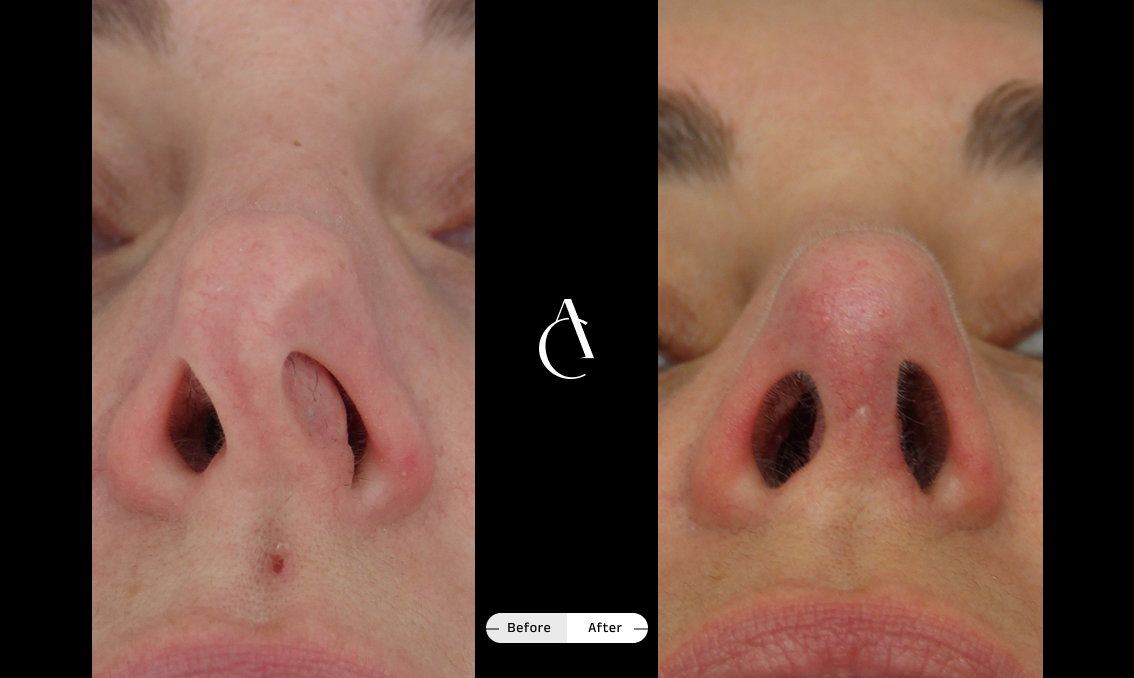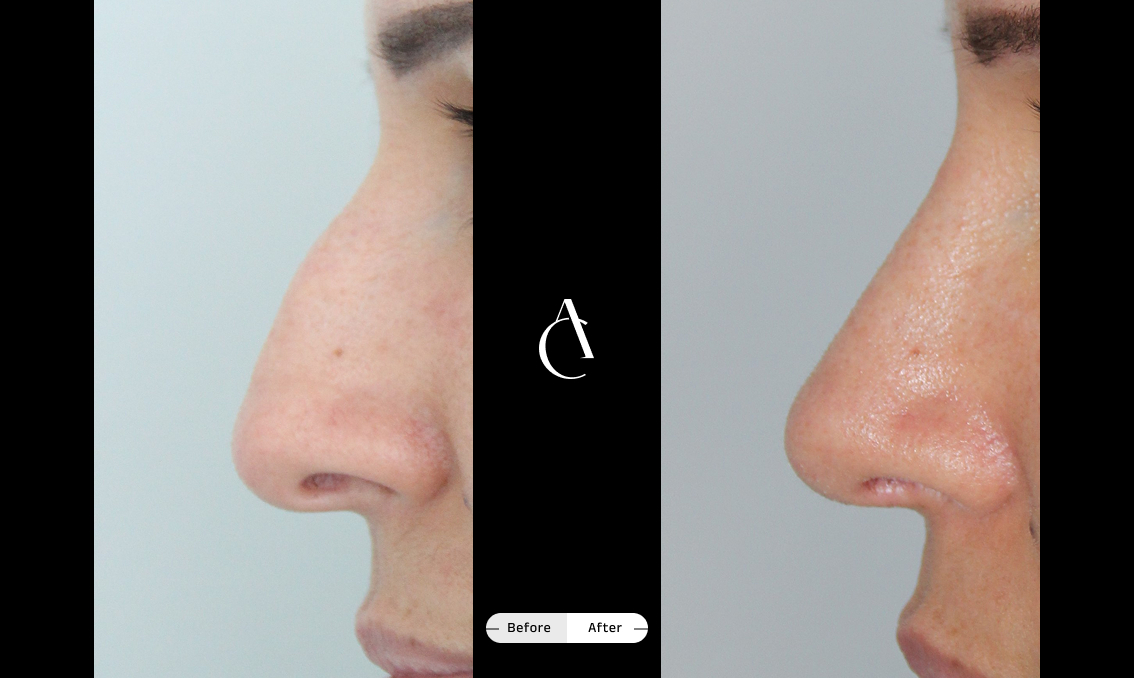
That doesn’t mean you’ll look swollen for a year. It means that the swelling that remains becomes more and more subtle over time.
How long does swelling last after rhinoplasty?
It helps to think about two different milestones. The first is looking socially recovered, when most people around you wouldn’t notice anything unusual. For many patients this comes within the first few weeks. The second is the final, refined result, when the last traces of swelling have gone and the contours of your nose, especially the tip, are fully defined. That can take many months.
Most patients don’t stay visibly “very swollen” for a year. The swelling that remains after the first couple of months is usually something you notice far more than anyone else does: a slightly fuller tip, a little less definition in certain lights, or a nose that looks a bit puffier first thing in the morning. Knowing this difference can save you a lot of unnecessary worry during recovery.
Rhinoplasty swelling timeline: what to expect
Every patient heals differently, so the stages below are general guidance. They shouldn’t replace the instructions your surgeon gives you.
First 24–72 hours
Swelling develops after surgery and often increases over the first two to three days. It isn’t limited to the nose; the cheeks, the area around the eyes and sometimes the upper lip can look puffy too. Bruising often appears at the same time, and our article on how long bruising lasts after rhinoplasty explains how that side of things progresses.
One week after rhinoplasty
Around a week after surgery, the external splint is often removed. This is an exciting moment, but it’s also one where expectations need managing. The nose you see when the splint comes off is not your final result. Depending on your procedure and the amount of swelling, it may look wider, larger, less defined or more upturned than you expected. This is normal, and it will change.
Two to four weeks after rhinoplasty
Visible swelling generally continues to go down significantly during this period. Many patients start to feel comfortable in social situations again, even though the nose is still healing internally and is still a little swollen.
One to three months after rhinoplasty
The overall shape of your nose becomes progressively clearer. Subtle swelling remains, though, and the tip in particular may still be developing its definition. You may also notice that the swelling fluctuates from day to day, which is part of the normal healing process.
Six months after rhinoplasty
By around six months, much of the swelling has usually resolved. Subtle changes can still continue, especially in the definition of the nasal tip.
One year after rhinoplasty
Rhinoplasty results are assessed over a long healing period. The final refinement often takes around a year, and in some patients or procedures it can take longer. This is why surgeons generally prefer to assess the final result once healing is complete.
Recovery varies between patients. This timeline is general guidance and should not replace the post-operative instructions provided by your surgeon.
Why does rhinoplasty swelling last so long?
Rhinoplasty changes tissues within a small, compact area. Surgery naturally triggers inflammation and fluid build-up as part of healing, and the nose then needs time for several things to happen: the tissues need to heal, the fluid needs to clear, the skin needs to adapt and shrink back onto the new structure underneath, the lymphatic drainage of the area needs to recover, and scar tissue needs to mature and soften.
Together, these explain why subtle swelling lasts far longer than bruising.
Why does the tip stay swollen after rhinoplasty?
The nasal tip is often the last part of the nose to refine. The skin over the tip tends to be thicker and contains more oil glands than the skin over the bridge, so it holds swelling for longer and takes more time to settle onto the shape underneath. If you had significant work on the tip, there is also more tissue healing to do in that area, and lymphatic drainage from the tip is relatively slow.
That’s why many patients find that their bridge looks well defined fairly early on, while the tip still looks larger or rounder than they hoped. This is a common stage of healing and doesn’t necessarily mean anything is wrong with the result.
What affects how long swelling lasts after rhinoplasty?
Swelling lasts longer for some people than for others. Factors that can play a part include:
- The extent of the surgery.
- Whether it’s a primary or revision rhinoplasty, as revision surgery often involves scar tissue that can prolong swelling.
- Skin thickness, as thicker skin generally takes longer to settle.
- How much work was done on the tip.
- Whether the nasal bones were repositioned.
- Your individual healing.
- How closely you follow your post-operative instructions.
- Not every one of these will apply to you, and having one of them doesn’t automatically mean your swelling will last longer. Your surgeon can give you a more realistic idea of what to expect based on your own nose.
Is uneven swelling after rhinoplasty normal?
Yes, swelling doesn’t always go down evenly. During healing, one side of your nose can temporarily look larger, more defined, less defined or slightly different in shape from the other. Understandably, this can make patients worry about asymmetry before the result has had a chance to stabilise.
In most cases, these differences even out as the swelling resolves. However, if you notice asymmetry that appears suddenly, or that persists once healing is well advanced, it’s worth having your surgeon take a look. In the meantime, try not to judge symmetry during the early months. Our article on whether a rhinoplasty can go wrong explains which signs genuinely need attention.
Can rhinoplasty swelling get worse again?
Swelling doesn’t go down in a perfectly straight line. It can fluctuate, and it’s common to have days when your nose looks puffier than it did the week before. Things like physical activity, heat, sleeping position and the time of day can all have a temporary effect. Many patients notice their nose looks more swollen in the morning and settles as the day goes on.
A temporary increase in swelling doesn’t mean your healing has gone backwards. Sudden, substantial swelling, particularly if it comes with pain, redness or follows a knock to the nose, is different and should be assessed.
How to reduce swelling after rhinoplasty
There’s no way to make swelling disappear instantly, but you can give your body the best conditions to heal:
- Follow your surgeon’s post-operative instructions.
- Keep your head elevated during early recovery.
- Avoid strenuous exercise until your surgeon gives you the all-clear.
- Protect your nose from knocks and pressure.
- Use cold therapy only if, and how, your surgeon recommends it.
- Follow any taping protocol your surgeon gives you.
- Stay well hydrated and follow the dietary advice you’re given.
- Avoid smoking.
- Attend your follow-up appointments.
- Give your tissues time to heal.
Does sleeping elevated reduce nose swelling?
Yes, keeping your head raised during the early recovery period uses gravity to help fluid drain away from your face, which can reduce swelling, particularly first thing in the morning. Our guide on how long you should sleep elevated after rhinoplasty explains how to do it comfortably and for how long.
Does taping help reduce swelling after rhinoplasty?
Some surgeons recommend taping the nose after the splint is removed, as it can help control swelling and support the skin as it settles, particularly over the tip. Protocols differ, and not every patient is given the same instructions. Tape should never be used on your own initiative to try to reshape your nose. If you’re wondering why taping is recommended, read what happens if you don’t tape your nose after rhinoplasty.
Does massage help reduce swelling after rhinoplasty?
For selected patients, surgeons may recommend gentle massage to help with persistent swelling. That doesn’t mean you should start pressing on your nose simply because it looks swollen. Whether massage is appropriate, when to start and which technique to use all depend on your procedure. Our article on how to massage your nose after rhinoplasty explains this in more detail.
Does ice help swelling after rhinoplasty?
Cold compresses are often recommended in the first couple of days after surgery to help with swelling and bruising around the eyes and cheeks. If your surgeon recommends them, avoid pressing on the operated nose and never put ice directly against your skin. Bear in mind that cold therapy helps most in the very early stages. It won’t make the deeper, residual swelling of the following months disappear.
What should you avoid if you want swelling to decrease?
A few habits can slow things down or cause a temporary flare-up of swelling:
Returning to strenuous activity too early (see when you can exercise after rhinoplasty).
Smoking, which affects blood flow and healing (see can you smoke after rhinoplasty).
Pressure on or knocks to the nose.
Ignoring the sleeping recommendations you’ve been given.
Massaging or manipulating your nose without being told to.
When does your nose reach its final shape after rhinoplasty?
Seeing a recognisable result and seeing the final, refined result are not the same thing. As the swelling decreases, the contours of your nose become clearer, the tip gains definition, and small asymmetries caused by uneven swelling tend to settle. Gradually, your nose takes on its final appearance.
This process is gradual, and the exact date varies from person to person, which is why no responsible surgeon will promise you a fixed date for your final result. For more on how long the result lasts once it has settled, see how long rhinoplasty lasts and whether it is permanent. If you’re curious about how the result fits with the rest of your face, read does a nose job change your face.
When should you be concerned about swelling after rhinoplasty?
Swelling that gradually improves, even if it fluctuates, is expected. Contact your surgical team if you notice:
- A sudden, substantial increase in swelling.
- Severe or worsening pain.
- Significant new swelling on one side.
- Increasing redness or warmth.
- Fever or other signs of infection.
- Breathing difficulty beyond the normal congestion of recovery.
- Swelling after a knock or injury to the nose.
If you’re unsure, call the clinic rather than trying to work it out on your own.
Frequently asked questions about swelling after rhinoplasty
When is swelling worst after rhinoplasty?
Swelling usually increases over the first two to three days after surgery before it starts to go down.
How swollen will my nose be after one month?
Most of the early swelling has usually gone down by one month, but some residual swelling remains, particularly around the tip.
Is my nose still swollen after three months?
Yes, subtle swelling can still be present at three months. This is normal, and the definition of your nose continues to improve after this point.
Can swelling last a year after rhinoplasty?
Subtle residual swelling, especially in the tip, can take around a year or longer to resolve fully. Obvious swelling doesn’t usually last that long.
Why does my nose look bigger some days after rhinoplasty?
Swelling fluctuates during recovery. Activity, heat, sleeping position and the time of day can all affect how your nose looks from one day to the next.
Can swelling make my nose look crooked?
Temporary uneven swelling can make your nose look slightly asymmetric during healing. If you’re still concerned once the swelling has settled, discuss it with your surgeon.
How can I make rhinoplasty swelling go down faster?
Follow your surgeon’s instructions, keep your head elevated early on, avoid strenuous activity and smoking, and protect your nose. Beyond that, healing simply takes time and can’t safely be rushed.
Book a consultation with Dr. Cuno
If you are considering rhinoplasty or have concerns about swelling during your recovery, Dr. Cuno can assess your healing, explain what is normal at your stage of recovery and give you personalised post-operative guidance.
Get in touch via the contact page to arrange a consultation at Dr. Cuno’s clinic in Geneva.