Post-operative care, including sleep, directly affects the amount of swelling you experience, your comfort levels and how smoothly your nose heals. Let’s take a closer look at why your sleep position matters, how long you should sleep with your head elevated for, and how to make this phase of your recovery more comfortable.
Why your sleep position matters after rhinoplasty
After rhinoplasty, as with any surgery, your body naturally responds with swelling, bruising and increased blood flow to the surgical area. This is part of the normal healing process, but lying flat can allow fluid to pool in your face, increasing puffiness around the nose and eyes. Sleeping with your head elevated helps:
- Reduce swelling and fluid build-up
- Minimise pressure inside your nose
- Support delicate nasal structures as they heal
- Decrease throbbing or congestion
It’s completely normal to feel uncomfortable or to notice tightness and stuffiness in the days immediately after your surgery. This is temporary, and sleeping in the right sleep position will help your body recover more efficiently. Find out more about what to expect from rhinoplasty recovery.
Best position to sleep after rhinoplasty
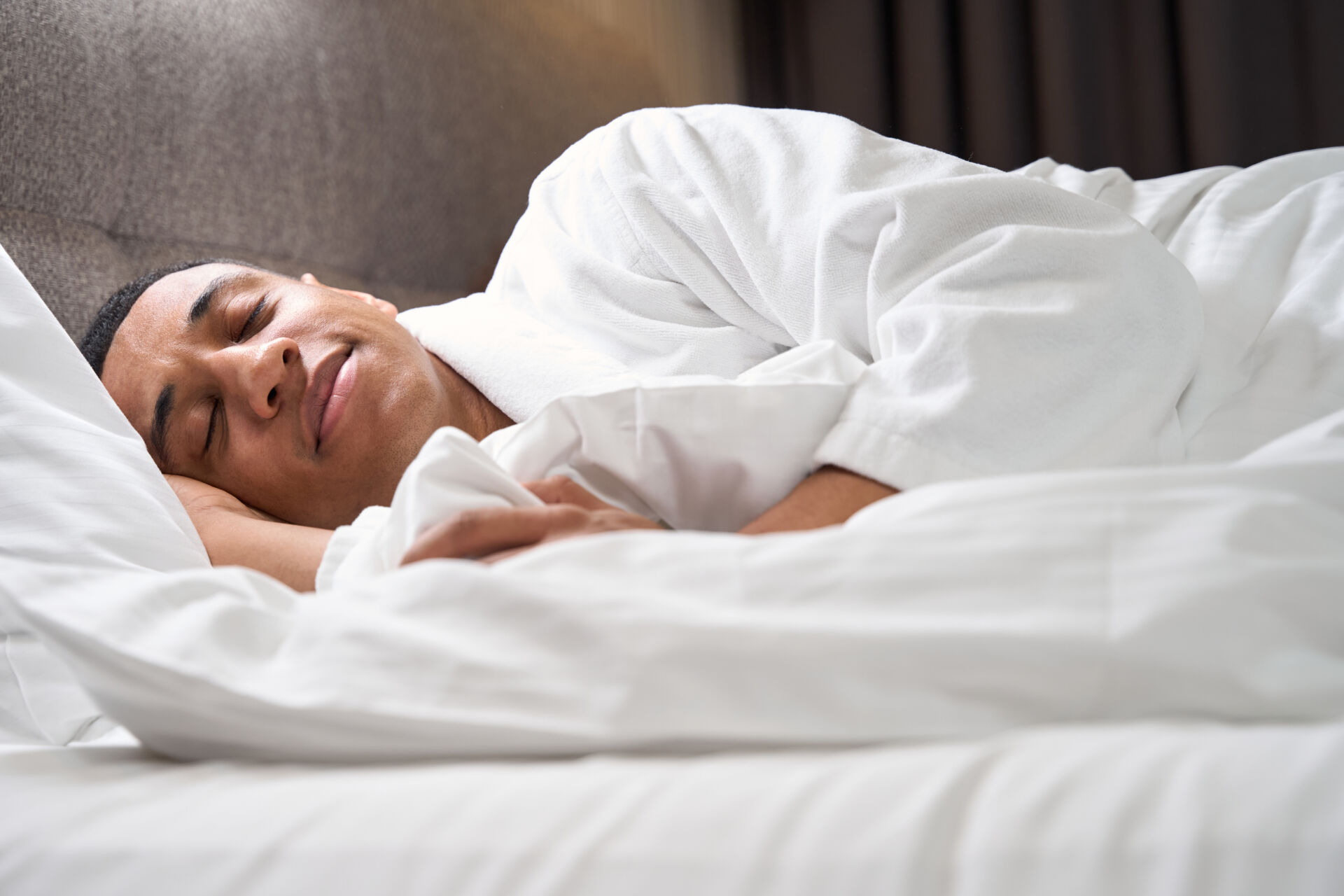
- When you’re considering how to sleep after rhinoplasty, there are two important goals: to avoid pressure on the nose, and to keep swelling under control. The best position to sleep after rhinoplasty is on your back with your head elevated.
Sleeping on your back prevents accidental bumps or compression that could affect the delicate healing tissues, splints or grafts in your nose. Elevating your head, usually at a 30 to 45° angle, helps gravity move fluid away from the surgical area.
Sleeping on your side or stomach isn’t recommended. This is because:
- It can put uneven pressure on your nose
- You might unknowingly shift during sleep
- Contact with pillows can irritate incisions or splints
Even light pressure can increase the swelling or discomfort you experience in the early healing phase.
How long should you sleep elevated after rhinoplasty?
Surgeons recommend sleeping with your head elevated for around 1 to 2 weeks after surgery. This is when swelling is most active and elevation makes the biggest difference. They usually advise using two or three pillows, or a wedge pillow for more stable elevation.
This guidance does vary from one person to another, as everyone heals differently. If your surgery was more complex – such as revision rhinoplasty or a procedure that involved structural grafting – your surgeon may advise sleeping with your head elevated for 3 to 4 weeks.
If in doubt, always follow your surgeon’s advice. Here at Dr Cuno’s clinic in Geneva, you receive personalised recovery guidance based on the specific surgical technique used and on your individual healing progress.

Images source: Envato
How to sleep comfortably with your head elevated
Sleeping upright can feel unnatural at first, but a few adjustments will make it easier. Try following these tips:
- Use a wedge pillow – this provides stable support from your shoulders upward, reducing neck strain.
- Stack pillows – if you’re using regular pillows, choose firm ones and position them to support your upper back as well as your head.
- Try a recliner – some people find resting in a recliner chair for the first few nights more comfortable.
- Support your neck – a travel neck pillow can prevent your head from tipping sideways.
- Stop yourself rolling over – place pillows on either side of your body or use a body pillow as a barrier.
Manage dryness and congestion – sleeping with your mouth open can cause dryness. Keep water nearby and use saline sprays if your surgeon approves.
Can you sleep on your side after rhinoplasty?
When can you sleep on your side after rhinoplasty?
Most patients are advised not to sleep on their side for at least two weeks after surgery. By this stage, the initial swelling and tissue fragility will have improved, although healing is still on-going.
Can you sleep on your side two weeks after rhinoplasty?
Possibly – but only if your surgeon agrees. Even at two weeks, pressure from sleeping on your side can increase swelling or disturb delicate healing structures. Surgeons usually recommend a gradual return, starting with brief periods and using soft pillows to minimise pressure.
Sleep positions to avoid in the early recovery phase
Avoid sleeping in the following positions for at least two weeks after your surgery:
- Sleeping on your side
- Sleeping on your stomach
- Sleeping face-down on a sofa arm
- Curling forward in a seated position
- Any position where your nose could be bumped when you’re half asleep
During your early recovery phase, you may move unconsciously. Creating a “safe sleep zone” with pillows around you can help prevent accidents.

Images source: Envato
When can you return to your normal sleeping habits?
Many patients return to their normal sleep positions around three to four weeks after rhinoplasty, but it may take longer if you’ve had a more complex or revision procedure.
Even once you start sleeping flat again, it’s normal for mild internal swelling to continue for months. Returning to normal sleep doesn’t mean that your healing phase is finished – it simply means your nose is stable enough to tolerate regular positions.
Tips for better sleep during rhinoplasty recovery
A few simple habits can make it easier to sleep, and can improve the amount and quality of all-important rest you get in the early phase of your rhinoplasty recovery:
- Take pain medication before bedtime, as directed by your surgeon
- Avoid alcohol and smoking
- Keep the bedroom cool and dark
- Maintain a consistent evening routine
- Stay hydrated
- Use saline sprays only if your surgeon approves
For a full overview of healing stages, have a read of our rhinoplasty recovery time guide.
Summary: give your nose time to heal while you sleep
Sleeping elevated on your back is one of the simplest but most effective ways to support your healing after rhinoplasty. Most patients need this elevation for one to two weeks, but it can sometimes be longer. Sleeping on your side too early can increase swelling or put pressure on your delicate nasal structures as they heal.
Every recovery is unique, so always follow personalised advice from your surgeon. If you have questions about sleep position or healing after rhinoplasty, book a consultation to discuss your recovery plan in detail.