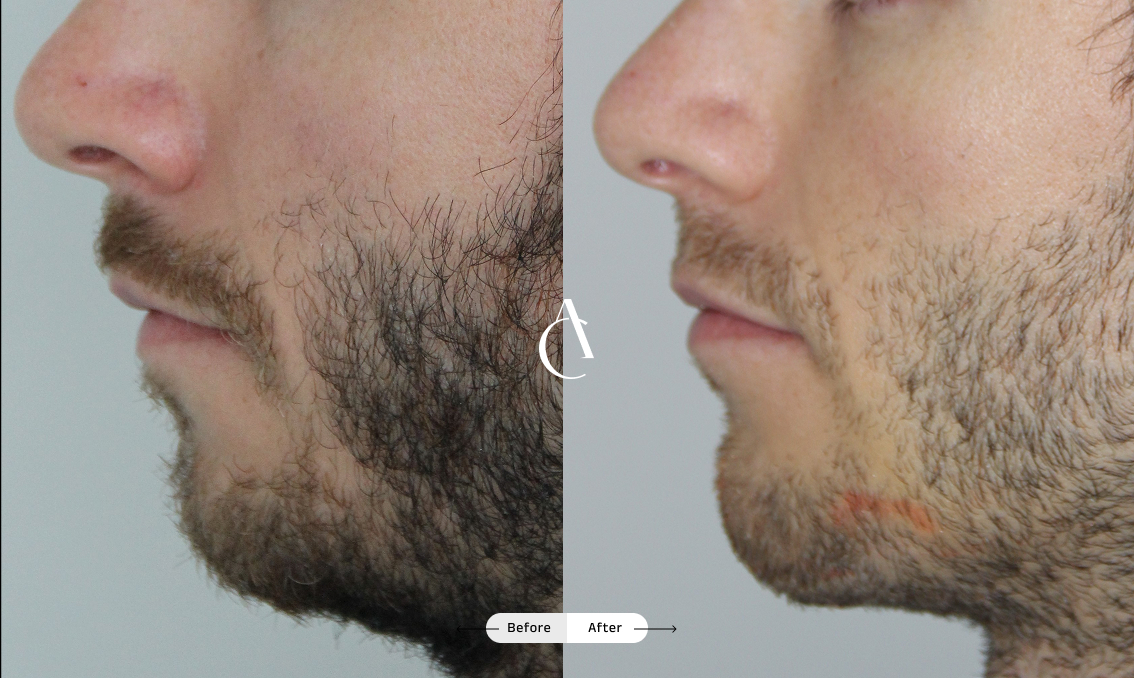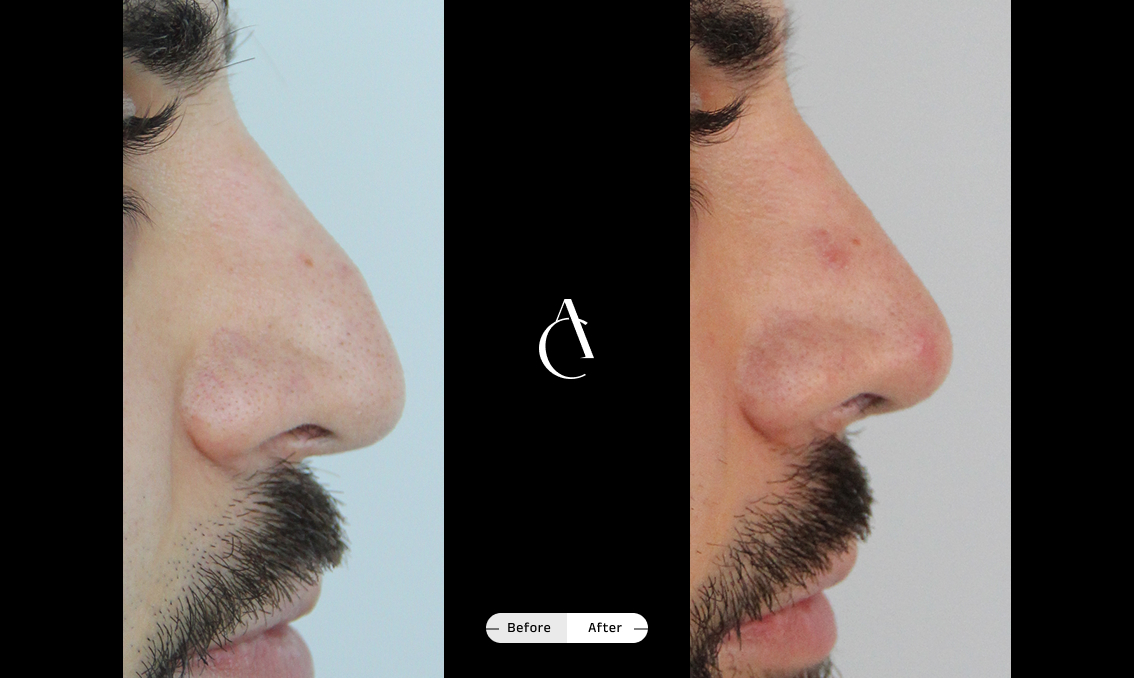

Liquid rhinoplasty can be performed safely in appropriately selected patients when it’s carried out by a suitably qualified and experienced practitioner. But “non-surgical” doesn’t mean “risk-free”, and it’s worth knowing the difference between the side effects you should expect and the rarer complications that need urgent attention. This isn’t an article designed to talk you out of the treatment, or to sell it to you either. It’s meant to give you the balanced picture that a lot of clinic websites tend to skip over.
What is a liquid rhinoplasty?
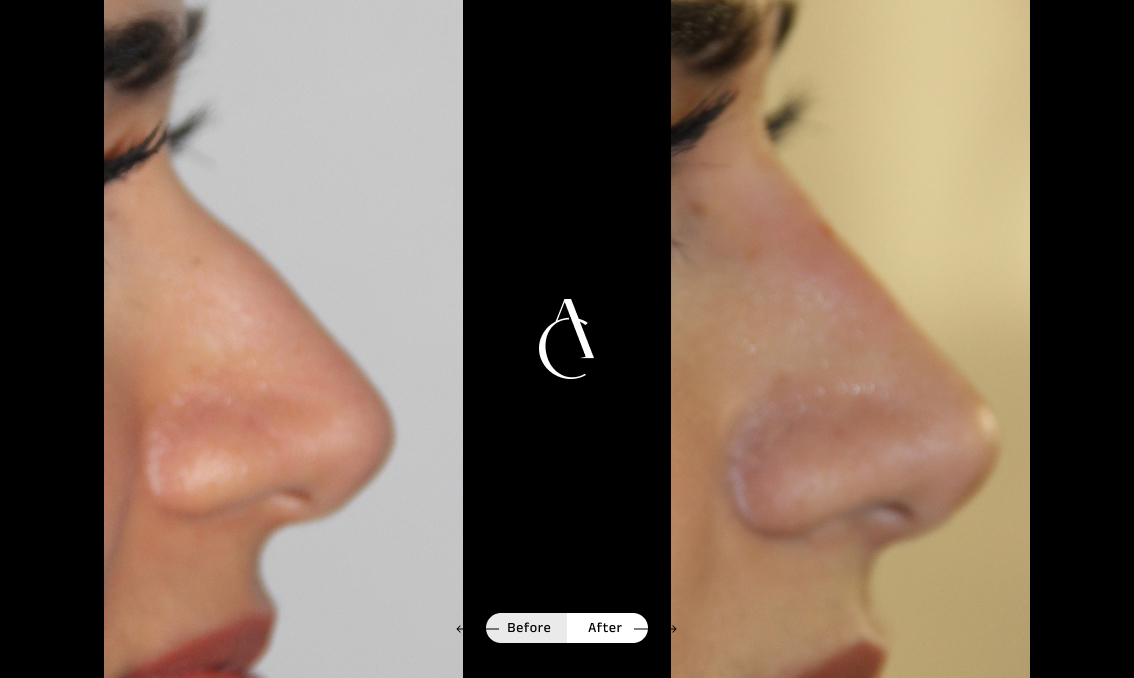
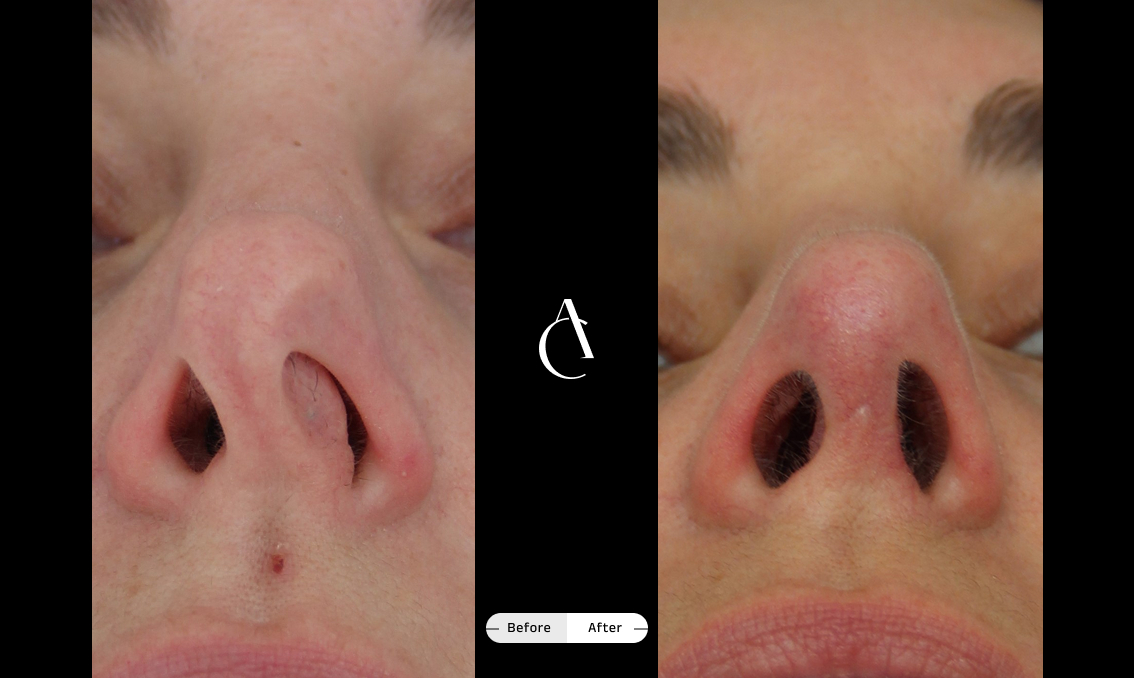
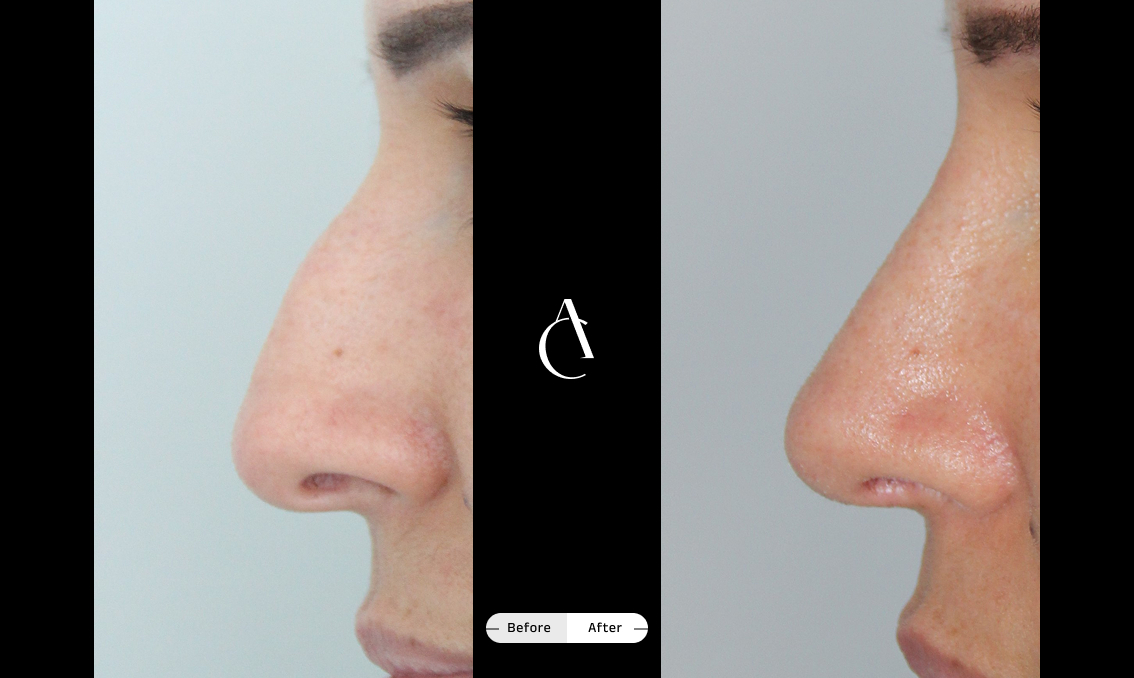
Liquid, or non-surgical, rhinoplasty uses injectable dermal filler to adjust the contours of the nose without surgery. Rather than removing tissue, it adds volume in specific areas to smooth a bump, improve symmetry or subtly lift the tip. Because it typically uses resorbable hyaluronic acid fillers, the results are temporary rather than permanent, which is one of the biggest differences between this and a surgical rhinoplasty.
It can be a good option for selected contour irregularities, dorsal profile concerns or minor asymmetries. What it can’t do is make your nose smaller, remove structural bulk or fix functional breathing problems, so it’s worth being realistic about what filler can and can’t achieve before you have it done. If your goal falls into that second category, filler isn’t the wrong choice because it’s unsafe, it’s the wrong choice because it simply won’t get you the result you’re after.
What are the risks and side effects of liquid rhinoplasty?
Most patients experience nothing more than the effects you’d expect from any injectable treatment. Redness, swelling, tenderness and bruising around the injection site are common in the first few days and settle on their own without any intervention.
Slightly less common are things like infection, visible asymmetry, small lumps under the skin or the filler migrating from where it was placed, creating an undesirable contour. These are more of a nuisance than a danger, and an experienced injector can usually correct or manage them, sometimes simply by dissolving and re-treating the area.
Then there’s a third category, and it’s the one that deserves the most attention: rare but serious complications linked to the blood vessels in and around the nose. These are uncommon, but they’re the reason nasal filler has a different risk profile to filler almost anywhere else on the face, and why it’s not a treatment to have done casually or cheaply.
Why can nose filler cause vascular complications?
The nose has a particularly dense and interconnected blood supply, and it sits close to vessels that also feed the surrounding facial tissue and, in rare cases, the eye. If filler is accidentally injected into a blood vessel, or compresses one enough to cut off blood flow, the tissue that vessel supplies can be starved of oxygen.
This is why anatomical knowledge matters so much more here than in areas like the cheeks or lips. A practitioner who understands exactly where these vessels run, who uses careful injection technique, chooses an appropriate product and recognises the early signs of a problem, is far less likely to run into trouble in the first place, and far quicker to act if something does go wrong. It’s also why the amount of filler used, the depth of injection and the specific tool used, whether that’s a needle or a blunt cannula, all factor into how the treatment is actually planned.

source: envato
Can liquid rhinoplasty cause blindness?
It sounds alarming, but it’s a genuine concern worth addressing directly rather than avoiding. Visual complications from facial filler are rare, but they can be serious, and they’re possible because of the vascular connections between the nose and the blood supply to the eye. If filler enters the wrong vessel, it can, in very rare cases, travel to and compromise that blood supply.
This is precisely why urgent medical intervention matters if visual symptoms occur after treatment, and why choosing a practitioner who can recognise and respond to this immediately is so important. It isn’t something to try to manage yourself, and it isn’t something a home remedy or a wait-and-see approach is ever appropriate for. A practitioner who takes this seriously will have a plan in place before they ever pick up a syringe, not one they improvise if something goes wrong.
What are the warning signs of a complication?
It’s just as important to know what’s normal as what isn’t. Expected effects after nose filler include mild swelling, tenderness and some bruising that gradually improves over the following days, along with some slight firmness under the skin while the product settles.
What shouldn’t be ignored is pain that feels disproportionate or worsens rather than settles, changes in the colour of the skin (particularly a blanching or dusky, mottled appearance), symptoms that get worse instead of better, or any change in your vision. Any of these should prompt an urgent call to your practitioner rather than a wait-and-see approach. Timing matters here too: symptoms that appear during or immediately after the injection, rather than days later, are generally the ones that need the fastest response.
Is hyaluronic acid nose filler reversible?
One of the advantages of using a hyaluronic acid filler is that it can potentially be dissolved with an enzyme called hyaluronidase if needed. That’s reassuring, but it’s not the same as saying the treatment carries no risk. Not every filler responds to hyaluronidase, dissolving the product doesn’t undo every possible complication, particularly if tissue damage has already occurred, and any reversal should be carried out under proper medical supervision rather than attempted informally. If you’re weighing up whether a nose job’s effects can be undone altogether, our article on whether a rhinoplasty can be reversed covers this in more depth for both filler and surgery.
Is liquid rhinoplasty safer than surgical rhinoplasty?
It’s tempting to assume that avoiding surgery automatically means avoiding risk, but it’s more accurate to say the two procedures carry different risk profiles rather than one being universally safer.
Liquid rhinoplasty avoids the risks that come with anaesthesia and surgical recovery, but it has its own filler-specific risks, the results don’t last, and it simply can’t achieve the structural changes that surgery can. Surgical rhinoplasty involves anaesthesia, a longer recovery and the risks that come with any operation, covered in more detail in can a rhinoplasty go wrong and can you die from rhinoplasty, but it can make lasting structural and functional changes that filler simply cannot. Which one is “safer” really depends on what you’re trying to achieve, and whether filler can realistically achieve it. If you’re still deciding between the two, is rhinoplasty worth it is a useful place to compare your options properly, and how long rhinoplasty lasts explains the permanence question in more detail.
Who shouldn’t have a liquid rhinoplasty?
Non-surgical rhinoplasty isn’t an alternative to surgery for everyone, and it’s worth being honest about that from the outset. If your goal is a genuinely smaller nose, significant structural correction, or resolving a functional breathing problem, filler isn’t going to get you there, no matter how skilled the injector. In those cases, surgery, or a specific procedure for your concern such as nasal obstruction surgery or a functional rhinoplasty, is the more appropriate route. There are also medical reasons a practitioner may decline to treat you on a given day, such as an active skin infection near the treatment area, so a proper assessment beforehand isn’t just a formality.
How can you reduce the risks of liquid rhinoplasty?
The single biggest factor in how safely a liquid rhinoplasty goes is who’s holding the syringe. Choose a practitioner with genuine medical qualifications and specific experience injecting the nose, not just filler generally. A proper assessment beforehand should cover your anatomy, any previous fillers or procedures, and exactly what product is going to be used, along with a clear explanation of the aftercare you’ll need to follow.
It’s also worth asking a question that tends to get overlooked: what would your practitioner do if a vascular complication occurred? A confident, specific answer tells you far more about their expertise than any before-and-after photo, because it shows they’ve thought about the risk rather than simply hoping it won’t happen. If the answer is vague, treat that as useful information in itself.
Is non-surgical rhinoplasty dangerous?
Not when it’s performed by someone appropriately qualified, on a suitable patient, with the right product and technique. It isn’t risk-free, but the serious complications discussed here are genuinely rare, and understanding them is what allows you to reduce the risk further rather than something to be frightened of. The reassuring part is that the factors that matter most, expertise, technique and patient selection, are largely within your control the moment you choose who treats you.
Book a consultation with Dr Cuno
If you’re considering liquid rhinoplasty, Dr Cuno can assess your nasal anatomy, talk through whether filler is the right approach for your goals, and explain the benefits, limitations and potential risks before you decide to go ahead. You can read more about his approach to injection rhinoplasty, or get in touch directly via the contact page to book a consultati