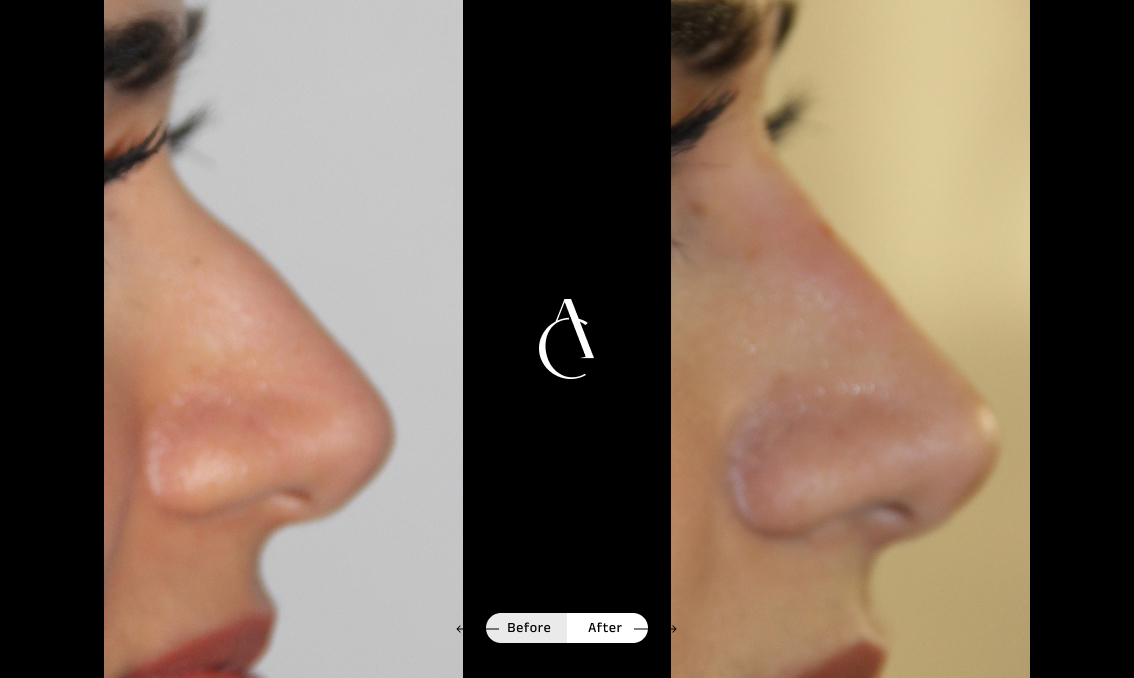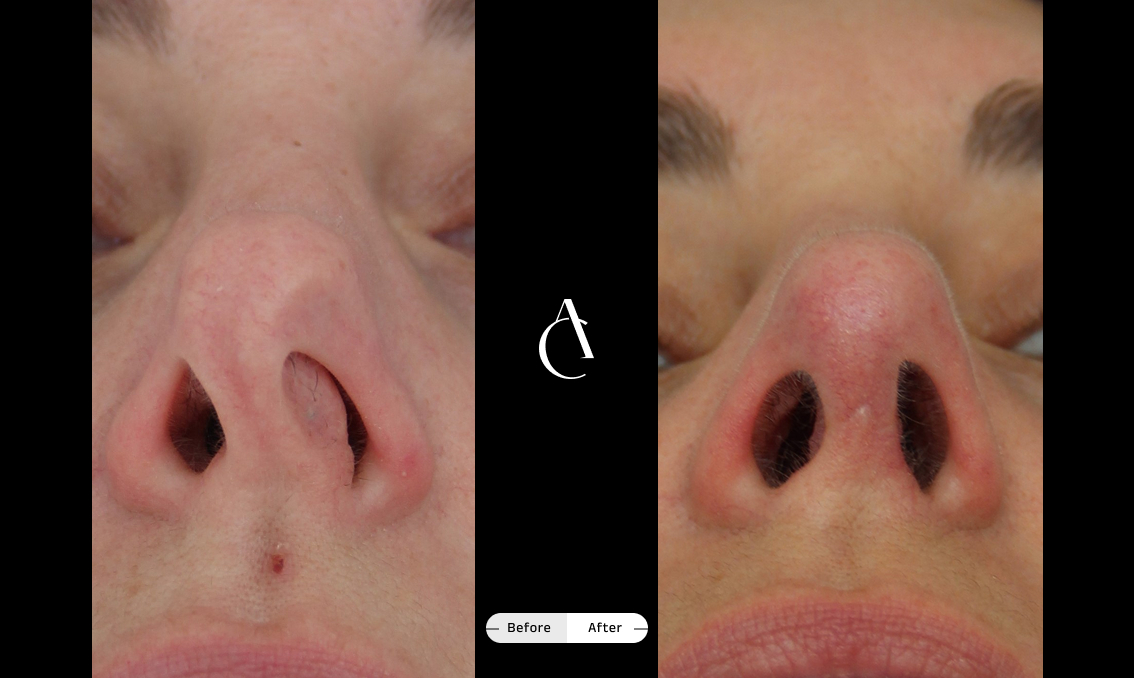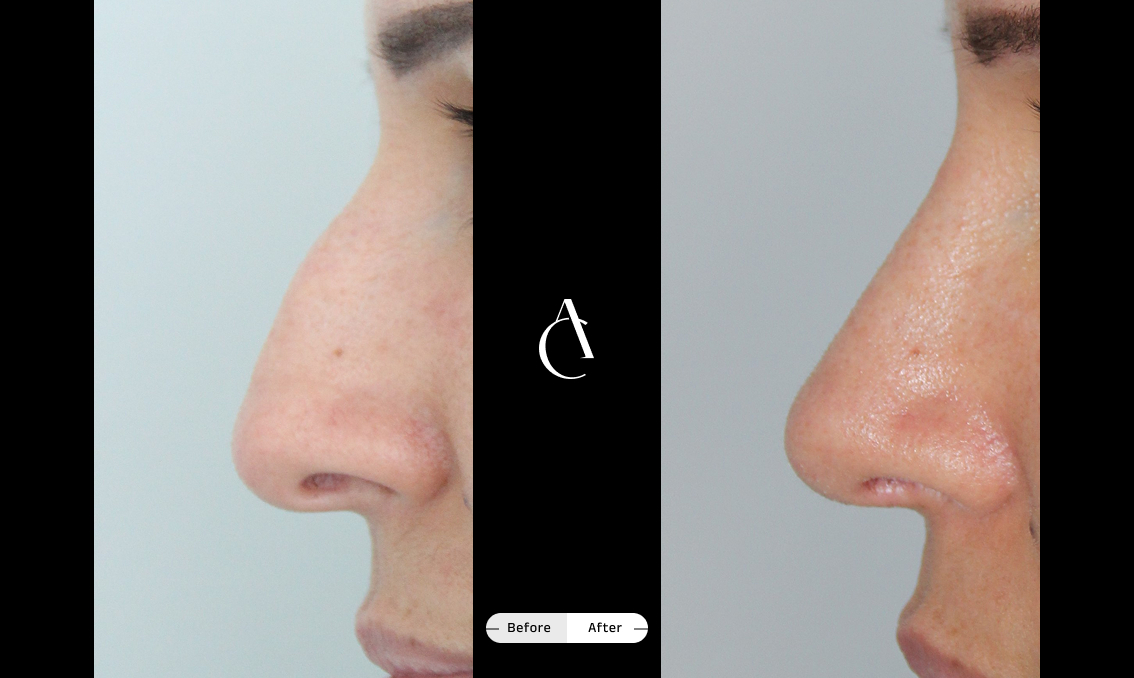

Let’s look at how each procedure works, when they’re recommended, and how you can decide which option is right for you.
What is a deviated septum and why does it matter?
The nasal septum is the wall of cartilage and bone that divides your nose into two separate passages. Ideally, it sits centrally and allows air to flow evenly. However, many people have a deviated septum, which means it’s displaced to one side, narrowing one airway.
This can lead you to experience symptoms such as:
- Persistent nasal blockage or congestion
- Difficulty breathing through your nose
- Snoring or sleep disturbance
- Recurrent sinus infections
- Mouth breathing
- Headaches or facial pressure
Both septoplasty and functional rhinoplasty aim to improve airflow and relieve these symptoms. While some patients also aim to make cosmetic changes, the primary goal in both these surgeries is restoring the proper function of your nose.
What is septoplasty?
Septoplasty is a surgical procedure that straightens your nasal septum to improve airflow. It’s considered a functional operation, as it’s focused entirely on the internal structures of your nose rather than its external appearance. During septoplasty, your surgeon will correct issues such as:
- Bent or displaced septal cartilage
- Deviated bony structures
- Bone spurs that obstruct airflow
Septoplasty can significantly improve your nasal breathing and reduce related symptoms, particularly when the obstruction is primarily due to a deviated septum rather than structural collapse elsewhere.
What is functional rhinoplasty?
Functional rhinoplasty is a broader procedure designed to improve both your nasal breathing and structural support. In addition to addressing any issues with your septum, it may involve correcting problems with your nasal valves, cartilage framework or deformities caused by trauma, such as an injury or previous surgery. Your surgeon may:
- Strengthen weak or collapsed nasal valves
- Rebuild cartilage support
- Correct structural asymmetry
- Address airflow issues that couldn’t be resolved by septoplasty alone
Because it involves making changes to your overall nasal framework, a functional rhinoplasty procedure can also refine the external shape of your nose if necessary or desired – for example, straightening a crooked nose or improving symmetry. To learn more, see our dedicated page on functional rhinoplasty.

Images source: Envato
Functional rhinoplasty vs septoplasty: key differences
Here’s a simple comparison of the differences between these two surgeries:
| Septoplasty | Functional rhinoplasty | |
| Areas treated | Septum only | Septum, nasal valves and structural framework |
| Typical indications | Straightforward deviation causing obstruction | Complex obstruction, valve collapse, trauma, revision surgery |
| Impact on nose shape | Usually none | May alter shape if needed |
| Surgical time and complexity | Generally shorter and simpler | More detailed and individualised |
| Scars | Internal only | Internal or small external incision depending on approach |
When is septoplasty enough and when do you need functional rhinoplasty?
The right procedure for you depends on the underlying cause of your symptoms.
Septoplasty may be sufficient if:
- You have a mild or moderate deviated septum
- There’s no significant external deformity
- Your nasal valves are stable
- Your breathing issues are limited to internal blockage
Functional rhinoplasty is often recommended if:
- You have nasal valve collapse
- Your nose is crooked or structurally weakened
- You’ve had trauma or previous surgery
- Your breathing problems persist despite prior treatment
- There are several structural factors contributing to your issues
A thorough ENT and facial plastic assessment – often including an examination of your nose, airflow testing and imaging – will help your surgeon determine the most appropriate approach for you.

Doctor man with white medical gloves touches girl face. Lip massage after receiving a injection in woman lips.
Images source: Envato
Can you combine septoplasty and functional rhinoplasty?
Yes. Many patients undergo a combined procedure known as septorhinoplasty, which deals with both the septum and your broader nasal structure in one operation. The benefits of combining these procedures include:
- A single anaesthetic and recovery period
- Comprehensive correction of airflow issues
- Improved structural stability
- Harmonised functional and cosmetic outcomes
This combined approach is particularly common when patients have both breathing difficulties and aesthetic concerns.
Recovery and results: is one easier than the other?
Whichever procedure you have, your recovery will vary depending on the extent of surgery.
After septoplasty:
- It’s common to experience mild congestion and discomfort
- Most of the swelling is internal
- You’ll usually be able to return to normal activities within one to two weeks
- Your breathing improvement should be noticeable once the initial swelling subsides
After functional rhinoplasty:
- You may experience external swelling and bruising
- Splints or dressings may be used
- Your initial recovery typically takes one to two weeks, but more subtle swelling can take longer to settle
- Your breathing will gradually improve as healing progresses
Because functional rhinoplasty is more complex, the healing process can be longer, but it often provides more comprehensive and lasting improvement when multiple structural issues are at play.
Read more about what to expect from rhinoplasty recovery.
How to choose between functional rhinoplasty and septoplasty
An evaluation by a surgeon experienced in both ENT and facial plastic surgery is essential to identify the root cause of obstruction in your nose and recommend the most effective solution.