What is nasal valve collapse?
The nasal valve is the narrowest part of your nasal passage, and it plays a crucial role in regulating airflow through your nose. It’s made up of two key areas:
- The internal nasal valve, located deeper inside your nose between the septum and the upper cartilage
- The external nasal valve, found closer to your nostrils and supported by softer cartilage
Because this area is so narrow, even a small weakness or narrowing can significantly restrict airflow. When the nasal valve collapses, it partially or completely blocks airflow when you breathe, particularly when you inhale. Nasal valve collapse is one of the most common causes of chronic nasal obstruction, yet it’s often misdiagnosed as simple congestion.
What are the main collapsed nasal valve symptoms?
The symptoms of nasal valve collapse can vary in severity, but they typically revolve around a persistent feeling of restricted airflow.
Common symptoms include:
- A blocked or stuffy nose, often without mucus
- Difficulty breathing through one or both nostrils
- Symptoms that worsen when breathing in deeply
- Exercise intolerance, where breathing becomes difficult during physical activity
- Mouth breathing, especially at night
- Poor sleep quality or waking feeling unrefreshed
Many patients describe the sensation as “not getting enough air” through the nose, even when it appears clear. Because of this, nasal valve collapse is often mistaken for chronic rhinitis or sinus issues.
Unlike temporary congestion, these symptoms tend to persist over time and may not respond well to standard treatments like decongestants or antihistamines.
Internal vs external nasal valve collapse symptoms
Understanding whether the issue involves the internal or external nasal valve can help clarify symptoms, although both can occur together.
Internal nasal valve collapse symptoms
Internal nasal valve problems are often more subtle, and harder to detect visually. Symptoms typically include:
- A feeling of restricted airflow deep inside your nose
- Breathing becoming more difficult when you inhale deeply
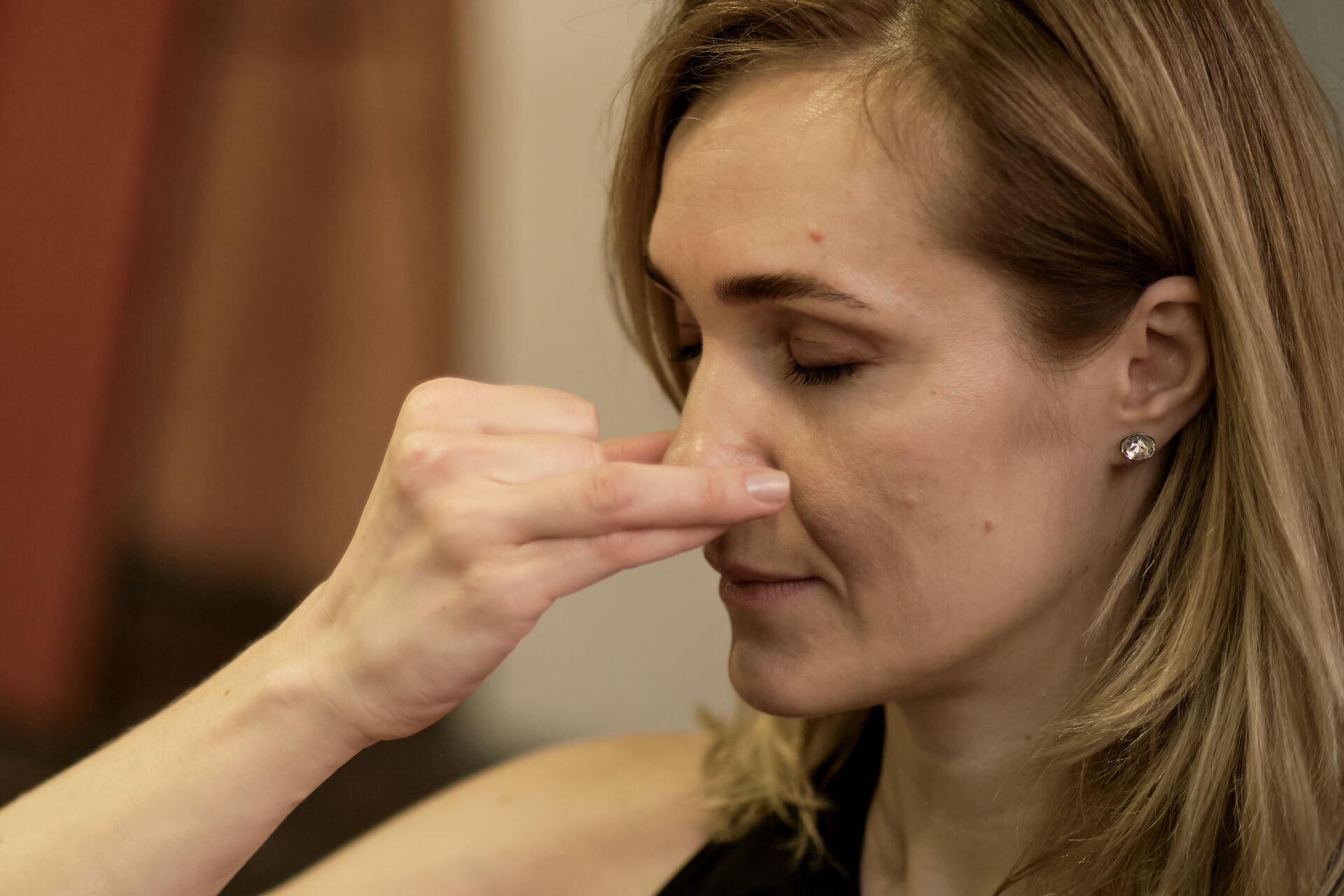
- Symptoms that may improve temporarily when pulling your cheek sideways (a sign sometimes used in clinical assessment)
Because there is no obvious external change, some patients may struggle for years without a clear diagnosis.

Images source: Envato
External nasal valve collapse symptoms
External nasal valve collapse is usually more visible and easier to recognise. Symptoms may include:
- Nostrils visibly collapsing inward when breathing in
- A sense of instability or weakness at the opening of your nostrils
- More pronounced breathing difficulty during physical exertion
In some cases, external valve collapse can be seen clearly in a mirror, particularly when taking a deep breath.
What causes nasal valve collapse?
Nasal valve collapse can develop for a variety of reasons, often related to structural weakness or previous changes to your nose. Common causes include:
- Trauma or injury to the nose – this can weaken cartilage support
- Previous rhinoplasty – especially if too much structural support was removed
- Naturally weak cartilage – this may be present from birth
- Congenital anatomy – where your nasal passages are naturally narrow
- Ageing – this can lead to gradual loss of tissue strength and support
In many cases, more than one factor is involved. For example, a patient with naturally narrow nasal passages may develop worsening symptoms over time as cartilage support weakens.

Images source: Envato
How is nasal valve collapse diagnosed and treated?
Diagnosis
A proper diagnosis begins with a detailed consultation and physical examination by a specialist who’s experienced in nasal airflow and structure. Assessment typically includes:
- A review of your symptoms and medical history
- A physical examination of your nose
- The Cottle manoeuvre, where gently pulling your cheek outward may temporarily improve the airflow through your nose, suggesting valve collapse
- In some cases, nasal endoscopy to examine internal structures more closely
Because nasal valve collapse can mimic other conditions, it’s important to get an accurate diagnosis before deciding on treatment.
Treatment options
Your treatment options will depend on the severity of your symptoms and on the underlying cause. Non-surgical options available to you may include:
- Nasal strips or dilators to temporarily improve airflow
- Medical management if other conditions (such as allergies) are also present
However, these approaches usually provide only short-term relief, and you may well find you need surgical treatment to bring about lasting improvement to your symptoms. This may include:
- Structural grafting, using cartilage to reinforce weak areas
- Nasal valve repair, to widen and stabilise the airway
- Septoplasty, if a deviated septum is found to be contributing to obstruction
- Functional rhinoplasty, which addresses both internal structure and airflow
These procedures are designed not just to improve your breathing, but to restore long-term structural support to your nose.
When should you see a specialist for nasal valve collapse symptoms?
If you’re experiencing on-going difficulty with breathing through your nose, it’s important not to ignore it, especially if symptoms are affecting your daily life.
You should consider seeing a specialist if:
- Your symptoms persist for several weeks or longer
- Breathing problems interfere with your sleep or exercise
- You regularly rely on mouth breathing
- Standard treatments like sprays or antihistamines are not effective
Early assessment can help identify whether nasal valve collapse is the cause of your breathing difficulties and guide you toward the most effective treatment.
Take the next step
Nasal valve collapse is a common but often underdiagnosed cause of breathing difficulty. The good news is that with the right diagnosis and treatment, your symptoms can be significantly improved – and in many cases, completely resolved.
If you suspect your symptoms may be related to nasal valve collapse, booking a consultation with a specialist like Dr. Cuno is the best way to understand your options for restoring comfortable, natural breathing.