Here’s why, and when you can get back to eating normally.
Can you chew after rhinoplasty?
Yes. You’ll be able to eat after your rhinoplasty, and you don’t need to stop chewing altogether. During the early recovery period, though, surgeons often recommend foods that don’t require much effort to chew.
The reason is simple. Chewing moves the jaw, cheeks and upper lip, all of which sit close to the operated area, and harder foods need more forceful movement. That doesn’t mean ordinary chewing will damage your result. The aim in the first days is just to avoid unnecessary strain and discomfort while the tissues begin to heal.
Why can chewing be uncomfortable after rhinoplasty?
Chewing involves more than your jaw. It also moves your cheeks, your upper lip and the muscles around your mouth and midface. After rhinoplasty you may also have swelling, tenderness, a blocked nose, a feeling of tightness in your face, and stitches or incisions depending on your procedure.
Put these together and big or forceful chewing movements can simply feel uncomfortable for the first few days. Having a blocked nose also means you’ll be breathing through your mouth, which makes eating slower and more awkward than usual.
Can chewing damage your rhinoplasty?
Normal, gentle chewing is very unlikely to undo a rhinoplasty. Eating is something every patient does from the first day, and the nose is designed to heal with this everyday movement going on around it.
What’s worth avoiding in the early weeks is direct pressure or trauma to the nose, such as a knock or bump, rather than ordinary chewing. One bite of a sandwich isn’t going to move your cartilage or spoil your result. If you’re worried about how stable the structures in your nose are, our article on whether cartilage can move after rhinoplasty explains this in more detail.
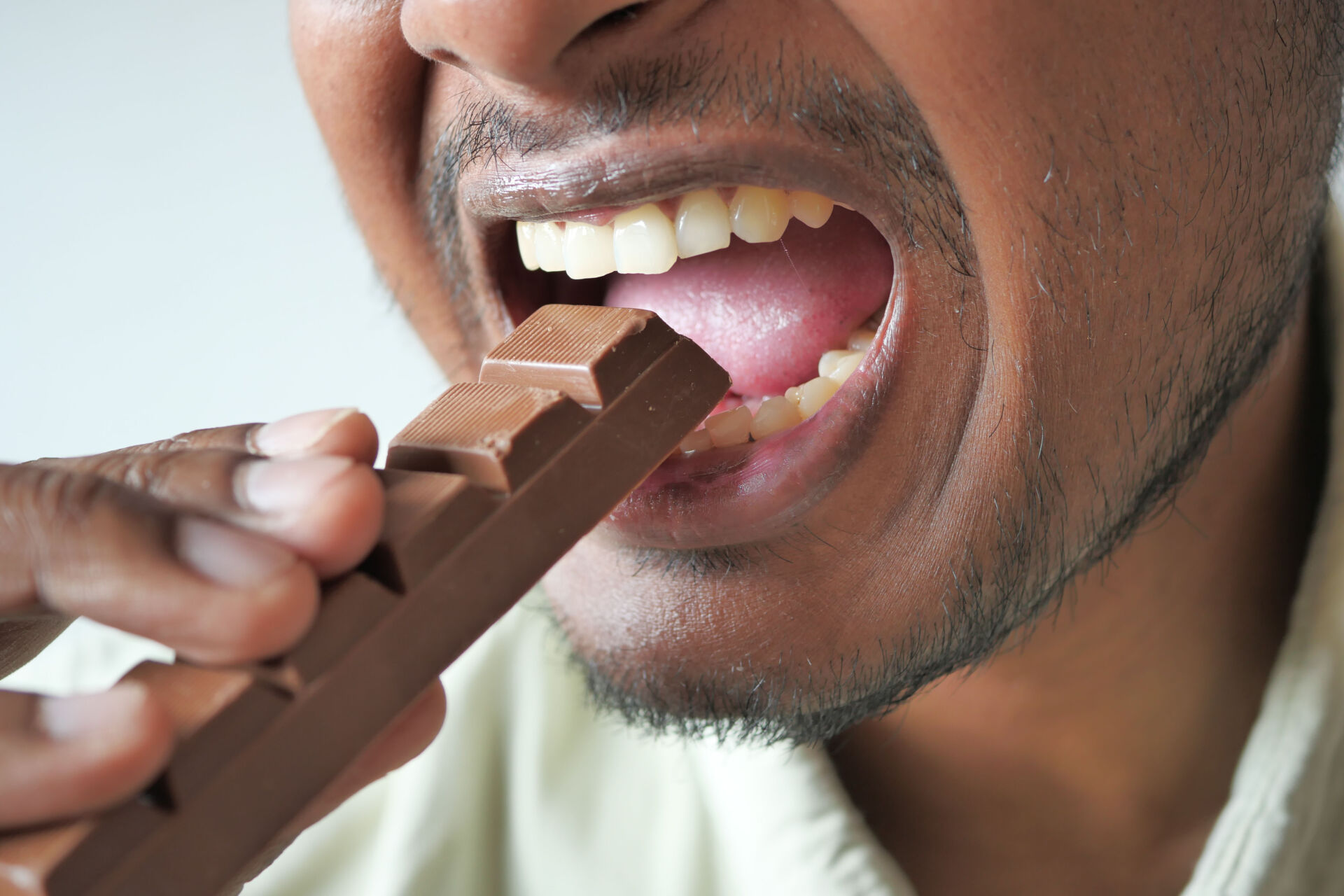
When can you chew normally after rhinoplasty?
Every patient is different, and your surgeon will give you specific guidance, but recovery usually follows a similar pattern.
First few days
Soft, easy-to-chew foods tend to be the most comfortable. Your face may feel stiff and swollen, and you’ll probably be breathing through your mouth, so smaller, softer mouthfuls make eating much easier.
During the first week
Most patients can gradually move on to foods with more texture as they feel comfortable, as long as they follow their surgeon’s instructions. Let your comfort level guide you, and don’t force anything that feels like hard work for your jaw.
Returning to normal chewing
Your surgeon will tell you when you can return to eating without restrictions, based on your procedure and how you’re healing.
What foods are easiest to eat after rhinoplasty?
In the first days, foods that need minimal chewing are usually the most comfortable, for example:
Yoghurt.
Soups, served warm rather than very hot.
Mashed potatoes or other mashed vegetables.
Scrambled eggs or omelettes.
Soft pasta and well-cooked rice.
Smoothies.
Soft-cooked vegetables.
For more on choosing foods that support your recovery, read our guide on what to eat after rhinoplasty.
What foods should you avoid during early rhinoplasty recovery?
For the first period of recovery, it’s sensible to avoid foods that need a lot of forceful or repeated chewing, or that make you open your mouth very wide, such as:
Tough or chewy meat.
Very crusty bread or baguettes.
Hard raw vegetables.
Nuts.
Hard sweets.
Very large foods like thick burgers or big sandwiches.
These are temporary restrictions, not a long-term diet. Follow the specific advice your surgeon gives you rather than cutting out more foods than you need to.
Can you chew gum after rhinoplasty?
It’s usually best to wait. Chewing gum involves continuous, repetitive jaw movement, often for much longer than a meal takes. Eating is necessary, but chewing gum is optional movement that you can easily avoid. For that reason, surgeons often recommend skipping gum during the first stage of recovery, even when gentle eating is perfectly fine.
Your surgeon will tell you when it’s appropriate for you to start chewing gum again.
Can chewing gum increase swelling after rhinoplasty?
Chewing gum isn’t a direct cause of nasal swelling. The reason to avoid it is that constant jaw and facial movement can add to discomfort and tightness in the early days, and surgeons generally prefer patients to keep unnecessary movement to a minimum while the tissues are at their most delicate. Avoiding gum for a short while is an easy way to keep things comfortable. For more on swelling and what affects it, see how long swelling lasts after rhinoplasty.
Can chewing affect rhinoplasty stitches?
This depends on where your incisions are, the type of procedure you had and how far along you are in your healing. Normal mouth movement is expected after surgery and your stitches are designed to cope with it. What you should avoid, if your surgeon advises it, is excessive stretching or strain around the nose and upper lip, such as opening your mouth very wide or very energetic chewing. Our article on rhinoplasty stitches explains what to expect.
Do you need a liquid diet after rhinoplasty?
No, a liquid-only diet isn’t usually needed after rhinoplasty. Rhinoplasty doesn’t involve the jaw, so most patients can eat soft foods from the start and gradually return to their normal diet, following their surgeon’s guidance. Liquids like soups and smoothies can be useful in the first day or two, when your appetite may be low, but they don’t need to be all you eat.
Does opening your mouth affect rhinoplasty?
You’ll still need to eat, drink, talk and brush your teeth after surgery, so normal mouth movement is unavoidable and expected. The concern is with excessive movement in the early days, such as opening your mouth very wide, rather than ordinary everyday opening of the mouth. For advice on keeping your teeth clean gently during recovery, see when you can brush your teeth after rhinoplasty.
Tips for eating comfortably after rhinoplasty
Choose softer foods for the first few days.
Take smaller bites.
Avoid foods that need forceful chewing.
Try not to open your mouth very wide.
Eat slowly.
Follow your surgeon’s post-operative instructions.
Gradually return to your normal diet as advised.
There’s no need to keep your jaw still or avoid eating. Normal, gentle eating is part of a healthy recovery.
Frequently asked questions about chewing after rhinoplasty
Can I chew after rhinoplasty?
Yes. Softer foods that need less chewing are usually recommended in the early days of recovery.
When can I chew normally after rhinoplasty?
Your surgeon will tell you when you can eat without restrictions, based on your procedure and how you’re healing.
Can I chew gum after rhinoplasty?
It’s usually best to avoid gum during the initial healing period, as it involves prolonged, repetitive jaw movement. Your surgeon will tell you when you can start again.
Can chewing move my nose after rhinoplasty?
No, ordinary gentle chewing won’t move your surgically reshaped nose. Just follow your surgeon’s advice during the early healing period.
Can I eat solid food after rhinoplasty?
Yes, generally as your recovery progresses. Soft solids are usually fine early on, and firmer foods can be added as you feel comfortable and as your surgeon advises.
Do I need to eat only soft foods after rhinoplasty?
Only for a short time. Soft foods are an early-recovery measure, not a long-term diet.
Book a consultation with Dr. Cuno
If you are preparing for rhinoplasty, Dr. Cuno can explain what to expect during your recovery and give you personalised advice on eating, daily activities and returning safely to your normal routine.
Get in touch via the contact page to arrange a consultation at Dr. Cuno’s clinic in Geneva.