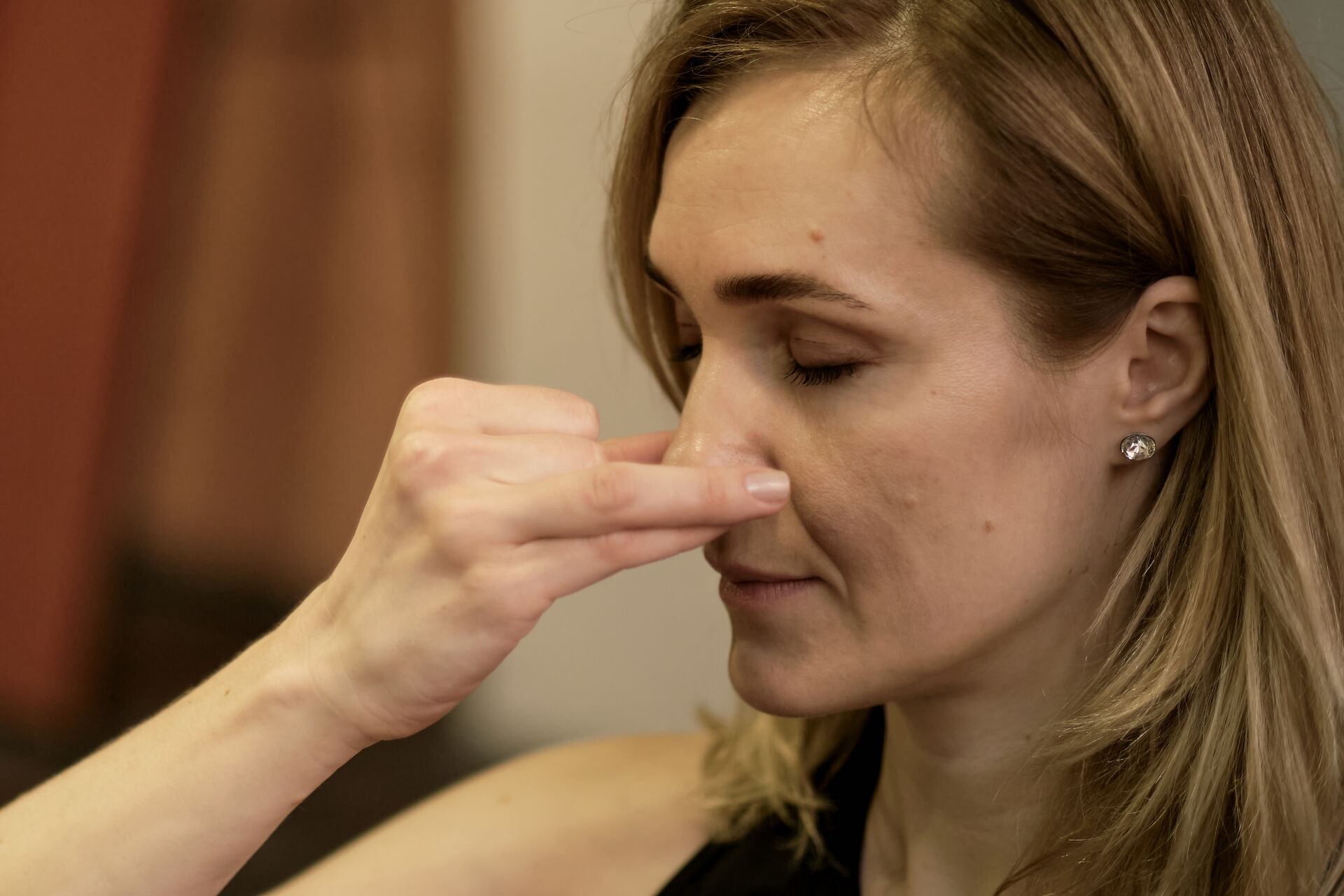
The short answer is that you should avoid picking your nose while it heals. The reassuring news is that these sensations are a normal part of recovery, and there are safer ways to feel more comfortable. Here is what to know about touching, cleaning and clearing your nose safely.
Why you should avoid picking your nose after rhinoplasty
Straight after surgery, the inside of your nose is far more delicate than usual. The internal tissues are swollen, small blood vessels are knitting back together, and you may still have stitches in place. A layer of crusting often forms as blood and mucus dry, which is completely normal and part of how your nose protects itself while it heals.
Picking your nose too early can interfere with all of this — you can read more in our guide to rhinoplasty stitches. Inserting a finger or fingernail may:
- trigger bleeding by reopening healing blood vessels
- increase swelling in already sensitive tissues
- disturb delicate structures and stitches as they heal
- introduce bacteria and raise the risk of infection
None of this means one slip will undo your surgery, so there is no need to panic if you touch your nose by accident. It simply means your nose needs a gentle, hands-off approach in these early weeks, much like blowing your nose, which also waits until your surgeon says it is safe.
How long after rhinoplasty can you pick your nose?
This is the question most patients really want answered, and the honest response is that there is no single timeline. Healing varies from person to person and depends on the type of rhinoplasty you had, how complex it was, your skin thickness and how your body recovers.
As a general guide, the first few weeks are the time to avoid picking completely. This is when swelling peaks, crusting is heaviest and the tissues are at their most fragile. As the weeks pass and the deeper tissues settle, gentle cleaning becomes gradually less risky, but that is very different from picking or digging inside the nostrils.
Above all, your surgeon’s advice takes priority over any general timeline online. Because they know exactly what was done during your procedure, they can tell you when it is safe to pick your nose after rhinoplasty and how to do it gently. If you are ever unsure, it is better to wait and ask.
What should you do if your nose feels blocked?
A blocked, congested nose is one of the main reasons people feel tempted to pick after rhinoplasty, so it helps to have safer alternatives. Rather than reaching inside your nose, try these:
- Use a saline spray several times a day to moisten the nasal passages and loosen debris
- Try a saline rinse, but only if your surgeon has specifically recommended one
- Run a humidifier to keep the air moist so crusts do not dry out and harden
- Clean gently around the entrance of the nostrils with a soft, damp cotton pad
- Apply any prescribed ointment to soften crusting, where advised
- Give crusts time to soften and clear rather than pulling them away
Much of the blocked feeling comes from internal swelling rather than mucus, so it eases as the swelling goes down. You can learn more in our guides on breathing through your nose after rhinoplasty and rhinoplasty recovery time.
Source: envato.com
Can picking your nose ruin your rhinoplasty?
It is a worry many patients have, so let us put it in perspective. A single accidental touch is very unlikely to ruin your result. Your nose is more resilient than it feels, and one unintentional contact rarely causes lasting problems.
The bigger concern is repeated or forceful picking while your nose is still healing. Digging inside during this fragile stage can:
- cause bleeding
- delay healing
- irritate internal scar tissue as it forms
- increase swelling
- potentially affect the final result if it causes significant trauma
So while there is no need to fear the worst over an accidental touch, it is worth resisting the habit of picking as your nose recovers. Treating it gently gives your surgery the best chance to settle into a natural result.
Is it safe to pick your nose 3 months after rhinoplasty?
By around three months, healing has usually progressed considerably. Much of the visible swelling has gone down, the outside looks closer to its final shape, and the inside feels more settled than in the early weeks.
That said, the internal tissues can still be maturing beneath the surface, and deep swelling often takes many more months to resolve. Gentle cleaning is generally safer now than in early recovery, but it is still wise to avoid forceful picking or anything that puts pressure inside your nose. If you still notice crusting or tenderness at three months, mention it to your surgeon rather than clearing it yourself.
Is it safe to pick your nose 6 months after rhinoplasty?
For many patients, six months marks a point where healing is largely complete and normal hygiene routines resume. The internal tissues are much sturdier, crusting has long since stopped, and light, careful cleaning is no longer the concern it was early on.
Even so, everyone heals at their own pace. If you had revision rhinoplasty or a more complex procedure, recovery may take longer. Supporting your body while it finishes healing helps too: avoiding smoking and eating nourishing, healing foods both give your tissues a better chance to recover fully. Persistent tenderness, swelling or discomfort at six months is worth having checked, as it is better to have your surgeon assess your nose than assume everything has healed.
How to clean your nose safely after rhinoplasty
Once your surgeon confirms you can start cleaning your nose, a careful, gentle approach is everything. Safe cleaning is about supporting your nose, not scraping it clean:
- Wash your hands thoroughly first to avoid introducing bacteria
- Never use your fingernails, and avoid pushing anything deep inside the nostrils
- Use a saline spray or rinse to loosen debris if your surgeon has recommended one
- Soften crusts and let them clear naturally rather than picking them off
- Gently clean only the entrance of the nostrils, and only once you have the go-ahead
As your nose settles, your surgeon may also talk to you about how to massage your nose to help swelling go down. As always, follow the specific instructions you have been given, since the right aftercare depends on the technique used in your surgery.
When should you contact your surgeon?
Some discomfort, crusting and congestion is expected, but certain signs are worth getting checked. Contact your surgeon if you notice:
- heavy or persistent bleeding
- pain that is increasing rather than easing
- foul-smelling discharge from the nose
- a fever or other signs of infection
- a blockage that will not clear over time
- swelling or a change in the shape of your nose after an accidental knock or trauma
Reaching out early is always the right move: your surgeon would far rather hear from you and reassure you than have you worry at home or try to fix something yourself.
Frequently asked questions about picking your nose after rhinoplasty
Can I remove dried blood after rhinoplasty?
It is best not to pick dried blood out in the early weeks, as this can pull at healing tissue and restart bleeding. Instead, soften it with a saline spray or rinse if your surgeon recommends one, and gently clean only around the nostril entrance. Let the rest loosen and clear naturally.
What if I accidentally picked my nose?
Try not to worry: a brief, accidental touch is unlikely to cause real damage. Keep an eye out for bleeding, increased swelling or discomfort, and avoid touching the area again. If you notice heavier bleeding or anything that concerns you, contact your surgeon.
Can I use cotton buds inside my nose?
Cotton buds should be used with caution, if at all. Pushing them inside the nose can disturb healing tissues and stitches, so many surgeons advise against it early on. If you want to clean gently, limit it to the outer nostril area, and always check with your surgeon first.
Why does my nose feel itchy after rhinoplasty?
Itching is a normal and often reassuring part of healing. As the nerves and tissues inside your nose recover, they can trigger tingling and itchy sensations, particularly as feeling returns. It usually settles as you heal, a little like the tenderness we explain in our guide to how painful rhinoplasty is, and resisting the urge to scratch or pick helps things along.
When does crusting stop after rhinoplasty?
Crusting is heaviest in the first couple of weeks and usually eases within a few weeks as your nose heals, though it varies from person to person. Keeping the nasal passages moist with saline, when recommended, and using a humidifier helps crusts soften and clear. If heavy crusting lingers well beyond the early weeks, mention it to your surgeon.
Book a consultation with Dr. Cuno
If you have concerns about nasal healing or are unsure how to clean your nose safely after rhinoplasty, Dr. Cuno can assess your recovery and offer personalised advice to help protect your surgical results. Book your consultation with Dr. Cuno today.