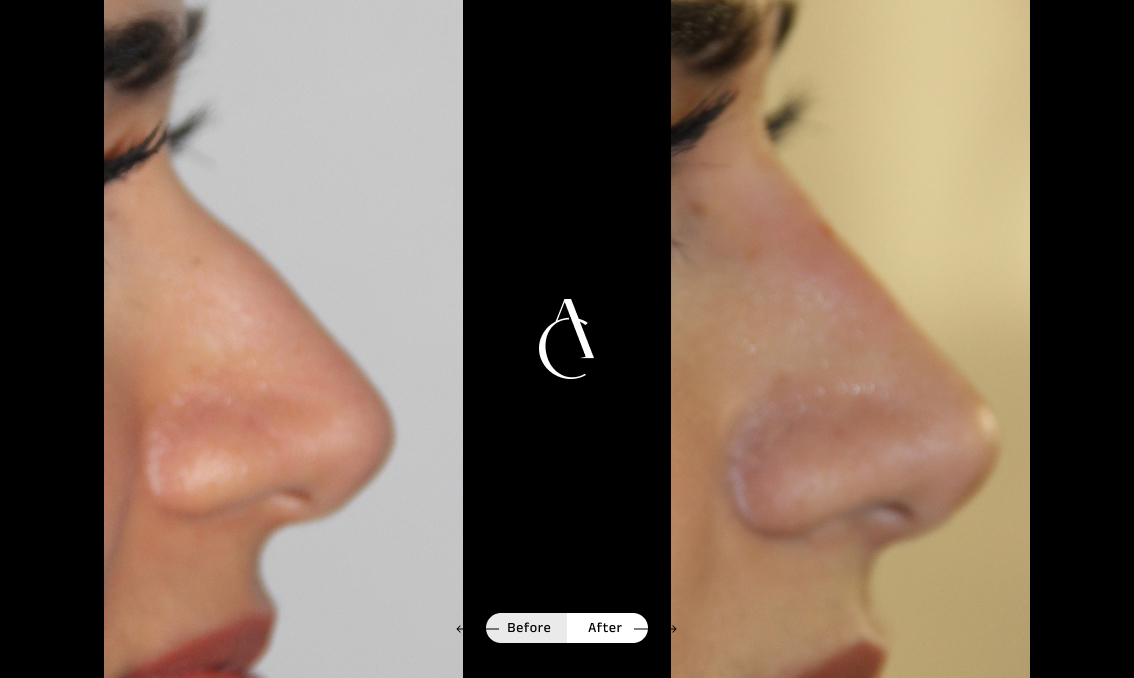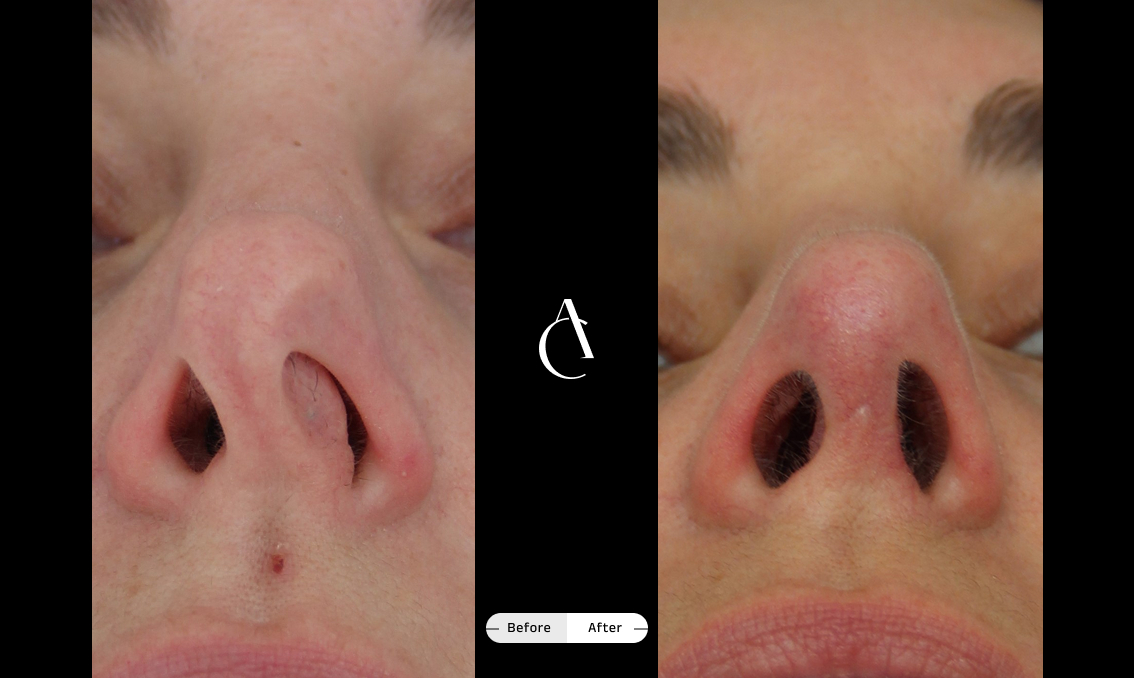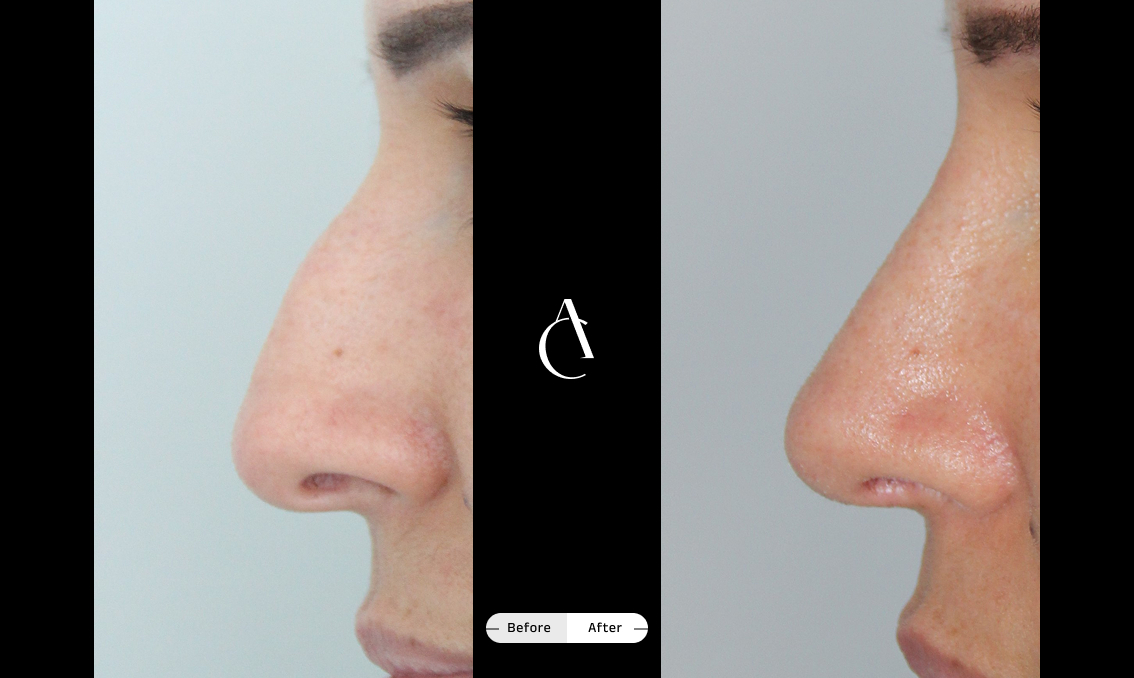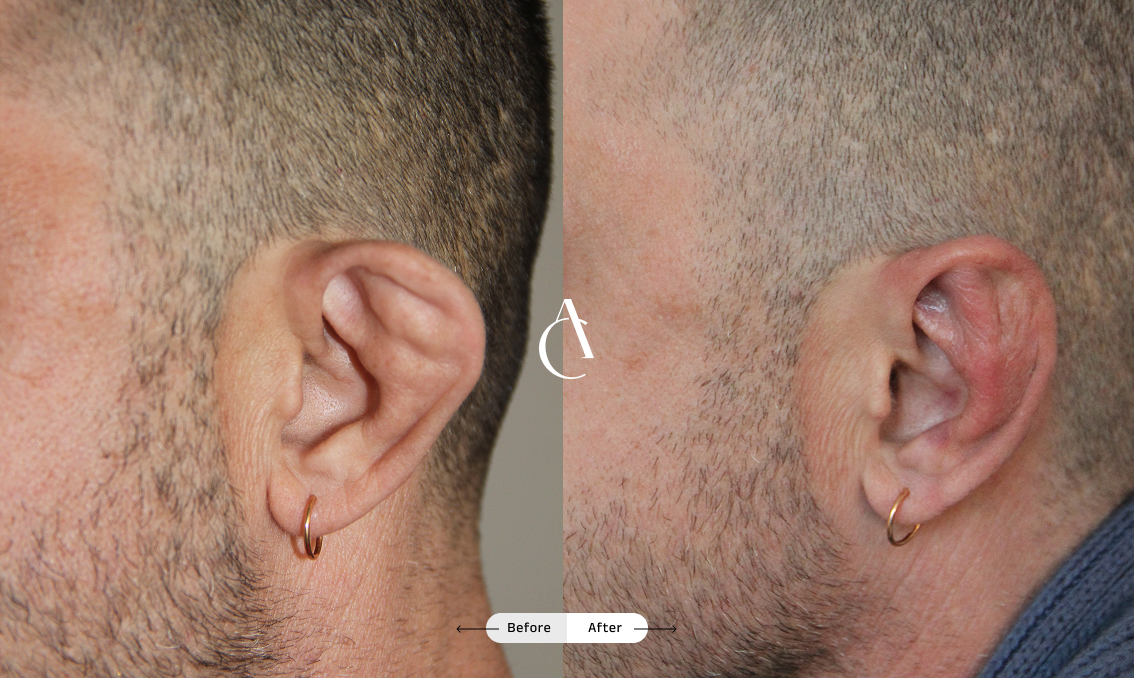
The most important thing to understand from the outset is that surgical and non-surgical rhinoplasty are completely different when it comes to reversibility. Here’s what that means in practice.
Is rhinoplasty reversible?
Surgical rhinoplasty can’t be reversed the way a temporary treatment can. During surgery your surgeon may remove or reshape cartilage, reposition the nasal bones, alter the tip, add cartilage grafts and adjust the structures inside your nose. These are permanent changes to your anatomy, and they can’t simply be switched back.
What is possible is revision surgery, which can sometimes restore certain features, correct problems or bring your nose closer to the appearance you want. That distinction, between undoing and revising, runs through this whole topic and it’s worth holding onto as you read.
Can you get your original nose back after rhinoplasty?
Rebuilding your exact original nose generally isn’t realistic. Tissue has been surgically altered, cartilage may have been removed, bone may have been repositioned, scar tissue forms and your anatomy changes as you heal. An experienced revision surgeon may be able to restore certain proportions or features, but it’s better to approach this expecting improvement and correction rather than a literal return to the nose you started with.
It can help to picture your nose as a structure built from a limited set of materials. Once bone has been reduced or a piece of cartilage removed, that material is gone. A surgeon can rebuild support and volume using grafts, but grafted tissue behaves a little differently from the tissue you were born with. This is why realistic revision surgery aims for a natural, balanced, well-functioning nose rather than turning back the clock.
What can revision rhinoplasty correct?
Revision rhinoplasty is the main surgical option when someone is unhappy with a previous procedure. It can address concerns such as asymmetry, over-reduction, tip problems, contour irregularities, structural weakness, breathing difficulties and an over-operated look. It’s worth being clear, though, that revision isn’t necessarily about reversing the first surgery. It means creating a fresh surgical plan based on the anatomy you have now.
Revision can be purely cosmetic, purely functional, or a mix of the two. You might be happy with how your nose looks but struggle to breathe through it, or breathe perfectly well but dislike a small bump or a pinched tip. Because these can overlap, a good assessment looks at form and function together. For related reading, see our guides on breathing problems after rhinoplasty and whether cartilage can move after rhinoplasty.

source: envato.
Is revision rhinoplasty more complicated than your first rhinoplasty?
Usually, yes. Revision procedures can be more technically demanding because of scar tissue, altered anatomy, less available cartilage and support structures that may already have been weakened. Extra cartilage grafts, sometimes taken from the ear or rib, may be needed to rebuild that support. It’s one of the main reasons that surgical experience matters so much in revision cases, and why a careful assessment always comes before any promises.
How long should you wait before trying to reverse or revise a rhinoplasty?
Feeling disappointed in the early weeks doesn’t necessarily reflect your final result. Swelling can distort tip definition, symmetry, proportion and profile, and the final refinement can take many months, often a year or more. For that reason patients are usually advised to allow full healing before deciding whether revision is right, unless there’s a medical reason to act sooner.
Patience really is part of the process here, in the same way it is with general recovery and with how your face settles after surgery. The nose you see at six weeks is not the nose you’ll have at twelve months.
Is non-surgical rhinoplasty reversible?
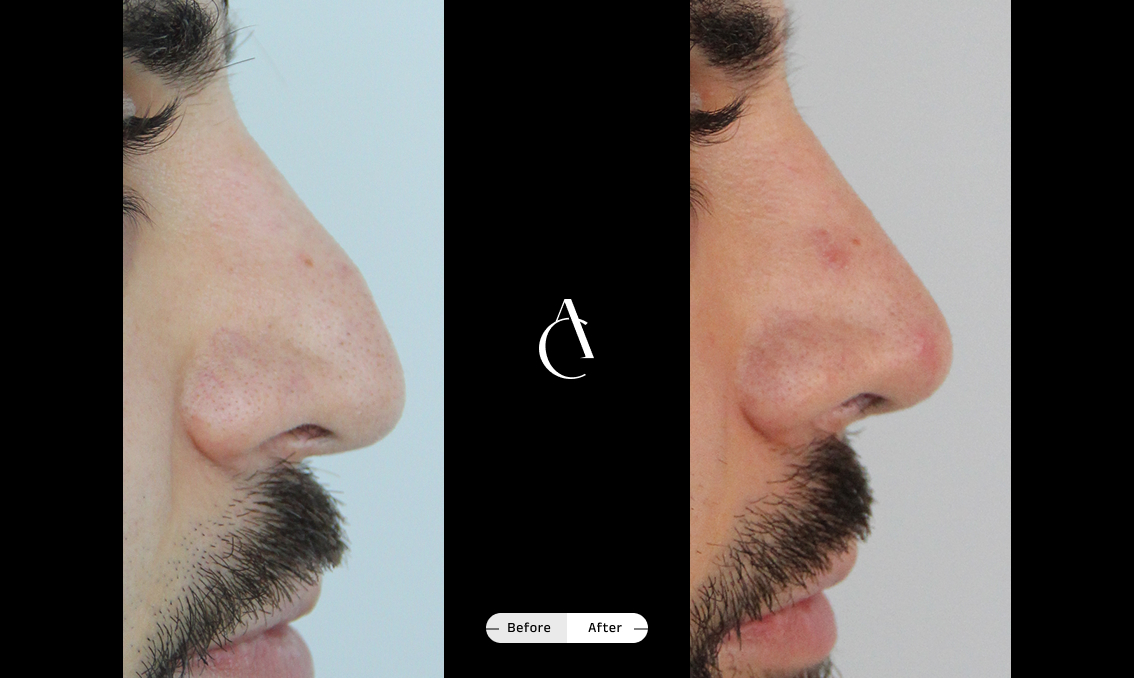
This is where filler-based treatment differs sharply from surgery. Some non-surgical rhinoplasties use hyaluronic acid dermal filler to smooth or reshape the nose without an operation. Unlike structural surgery, hyaluronic acid filler can potentially be dissolved. Whether a particular treatment can be reversed depends on the filler used, where it was placed, how much was used and your anatomy, so not every injectable placed in the nose is reversible.
Can non-surgical rhinoplasty be reversed with hyaluronidase?
Hyaluronidase is an enzyme that breaks down hyaluronic acid. Because many non-surgical rhinoplasties use hyaluronic acid filler, hyaluronidase can be injected to dissolve that filler and reduce or remove its effect. This should only be carried out by a suitably qualified medical professional, as the nose is a delicate area with an important blood supply.
The key point to remember is simple: hyaluronidase can act on appropriate hyaluronic acid fillers, but it can’t reverse the structural changes made during surgical rhinoplasty. Dissolving filler and reversing surgery are two entirely different things.
This is also why the choice of filler matters in the first place. Hyaluronic acid fillers offer the reassurance of being potentially reversible, whereas some other materials aren’t dissolvable and are much harder to remove if a problem develops. If reversibility matters to you, it’s worth confirming exactly which product is being used, and that whoever is treating you is qualified to manage a complication should one arise.
Will your nose return to normal after dissolving nose filler?
Dissolving filler removes or reduces the added volume, but you shouldn’t expect an instant or exact return to your previous look. There can be some temporary swelling after treatment, a little residual filler and a tissue response that takes time to settle, so a follow-up review is usually sensible once everything has calmed down.
In most cases the nose does settle back close to its starting point once the filler has broken down, because nothing underneath has been permanently altered. That’s the real advantage of a well-chosen hyaluronic acid treatment over surgery: the changes are added on top and, for the most part, can be undone. It’s still a medical procedure, so it should be planned and reversed under proper supervision rather than treated as risk-free.
What should you do if you regret your rhinoplasty?
If you’re unhappy with your result, a calm, staged approach tends to serve you best:
- Try not to judge the final result during early recovery, while swelling is still present.
- Speak with your original surgeon about your specific concerns.
- Allow swelling and tissues enough time to settle, where that’s medically appropriate.
- Seek a specialist revision assessment if your concerns remain.
- Focus on what can realistically be changed, rather than expecting the first operation to simply be undone.
Regret after rhinoplasty is more common than people expect, especially in the swollen early weeks when the nose looks nothing like its final self. Giving it time, along with an honest conversation with an experienced surgeon, often changes the picture a great deal. Where genuine problems remain after full healing, revision offers a realistic way forward, and the best outcomes come from clear expectations and a frank assessment of what your current anatomy will allow
source: envato.
Frequently asked questions about reversing rhinoplasty
Can rhinoplasty be completely undone?
Generally not in the literal sense, as the anatomical changes are permanent. Revision surgery can, however, restore or modify certain features.
Can cartilage removed during rhinoplasty be replaced?
In many cases cartilage can be rebuilt using grafts, though this restores support and shape rather than recreating your exact original cartilage.
Can you reverse an over-reduced nose?
It can often be improved. Revision and reconstructive techniques, including grafting, can rebuild an over-reduced nose depending on your anatomy.
Is non-surgical rhinoplasty permanent?
No. Filler-based results are temporary and fade over time as the filler is absorbed, and hyaluronic acid filler can often be dissolved sooner if needed.
Can hyaluronidase reverse a nose filler treatment?
Yes, for appropriate hyaluronic acid fillers. It doesn’t work on non-hyaluronic acid fillers or on surgical changes.
Can you have rhinoplasty again if you don’t like your results?
Yes, and this is what revision rhinoplasty is for. It’s usually carried out once healing from the first operation is far enough along.
Book a consultation with Dr. Cuno
If you’re unhappy with the results of a previous rhinoplasty, an honest, expert assessment is the best place to start. Dr. Cuno can examine your nasal structure, talk through what can realistically be corrected and help you understand whether revision rhinoplasty may be appropriate for you.
Book a consultation with Dr. Cuno at his clinic in Geneva to discuss your options and the most sensible next steps.