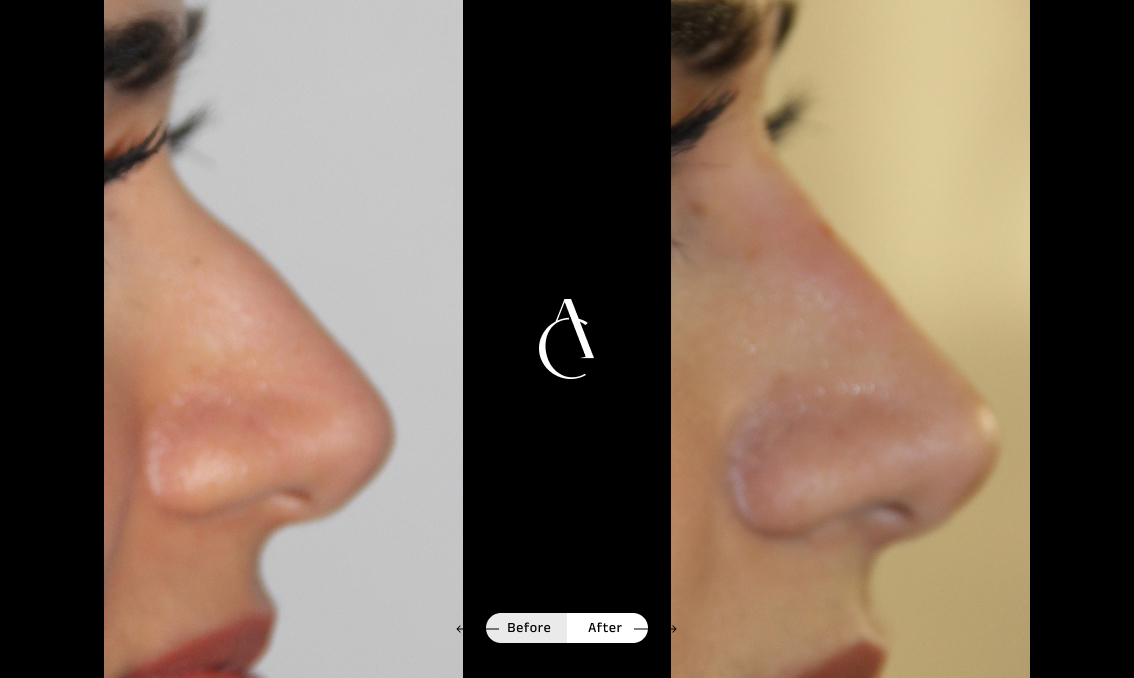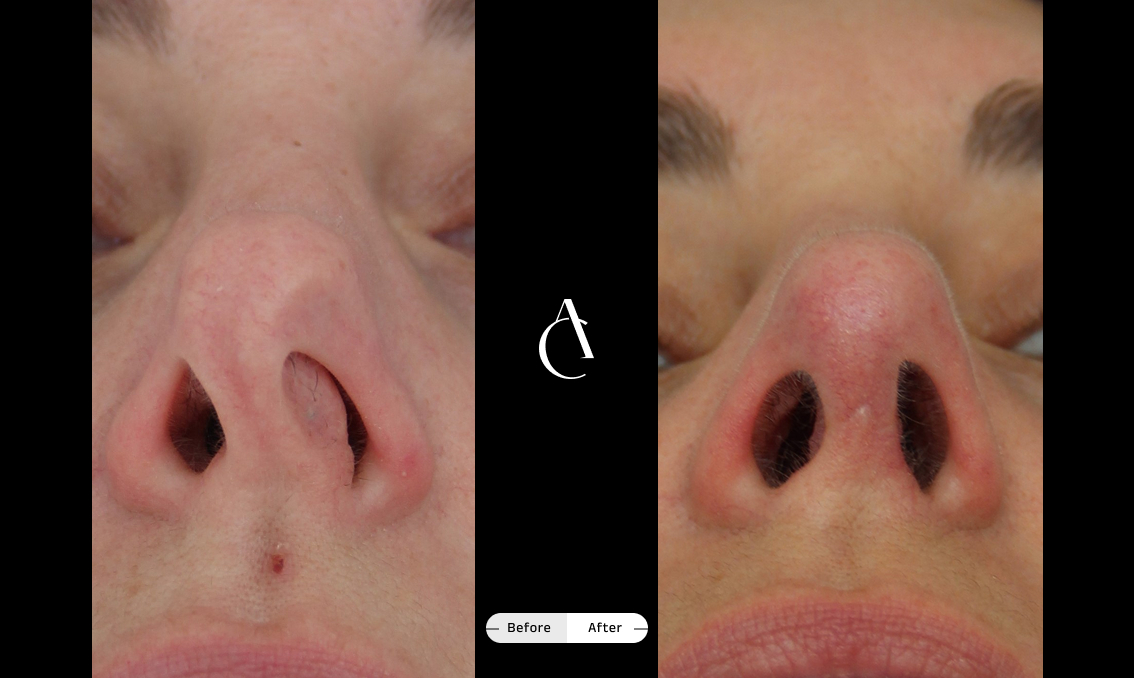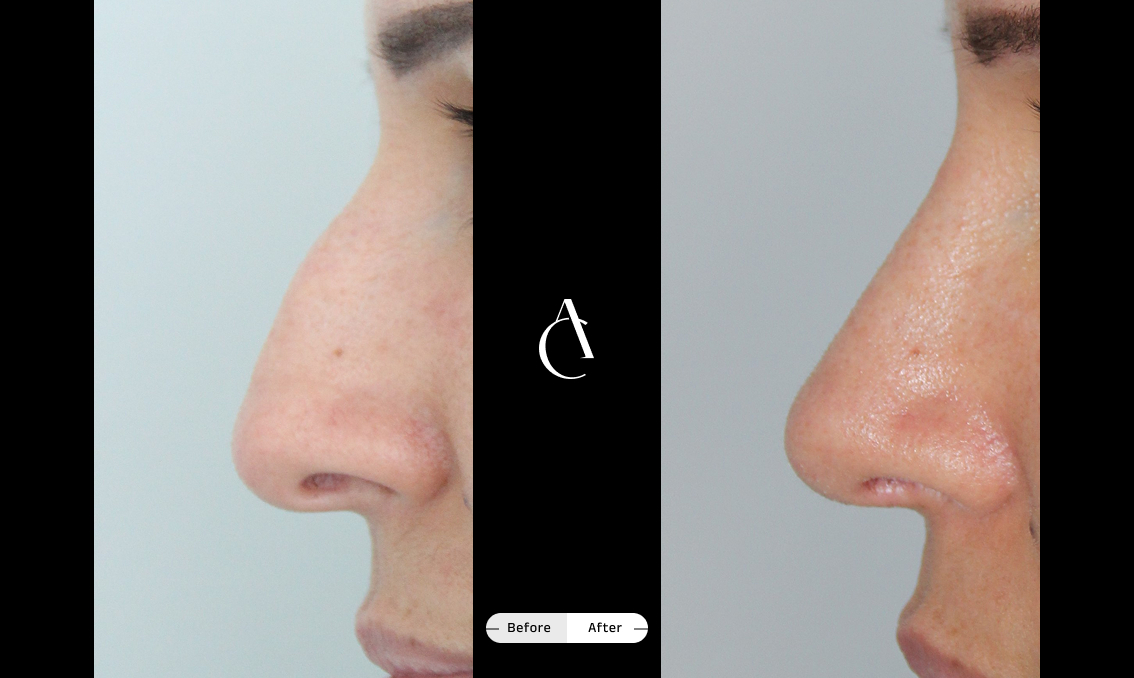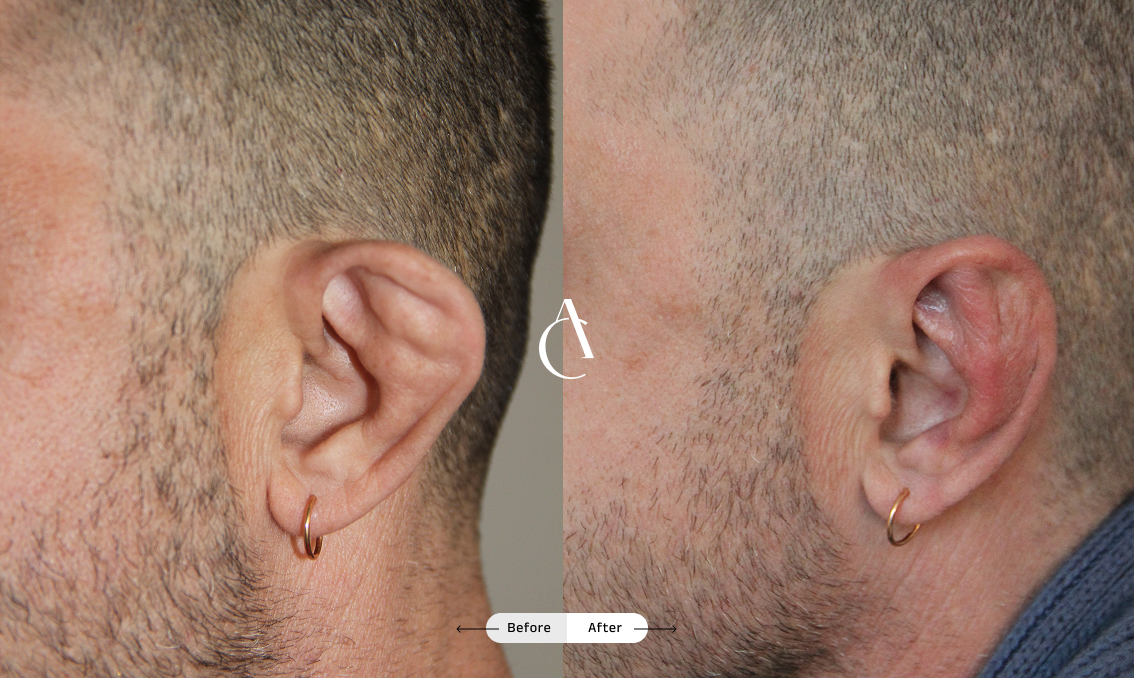
Here’s an honest look at how rhinoplasty can change your face, what stays the same, and why the goal is enhancement rather than transformation.
Yes, rhinoplasty can change the appearance of your face
Let’s answer the question directly: yes, rhinoplasty can change how your face looks – but only by changing your nose. Surgery reshapes the bone, cartilage and soft tissue of the nose itself; it doesn’t touch your eyes, cheeks, forehead or lips. The reason a nose job can appear to change your whole face is that the nose is the central feature everything else is arranged around. Refine it, and the surrounding features suddenly look more balanced.
This is why even subtle adjustments can have a surprisingly noticeable effect on your overall appearance. It’s also why the degree of change varies so much from person to person – someone reducing a prominent hump may see a bigger difference than someone making a small refinement to the tip. The aim of modern rhinoplasty isn’t dramatic transformation, but improved facial harmony that still looks like you. If you’re still weighing up whether surgery is the right choice, our article on whether rhinoplasty is worth it is useful further reading.
How does rhinoplasty change your face?
Because your nose anchors the middle of your face, changing its shape influences how the features around it are perceived. Rhinoplasty can affect:
- your facial proportions
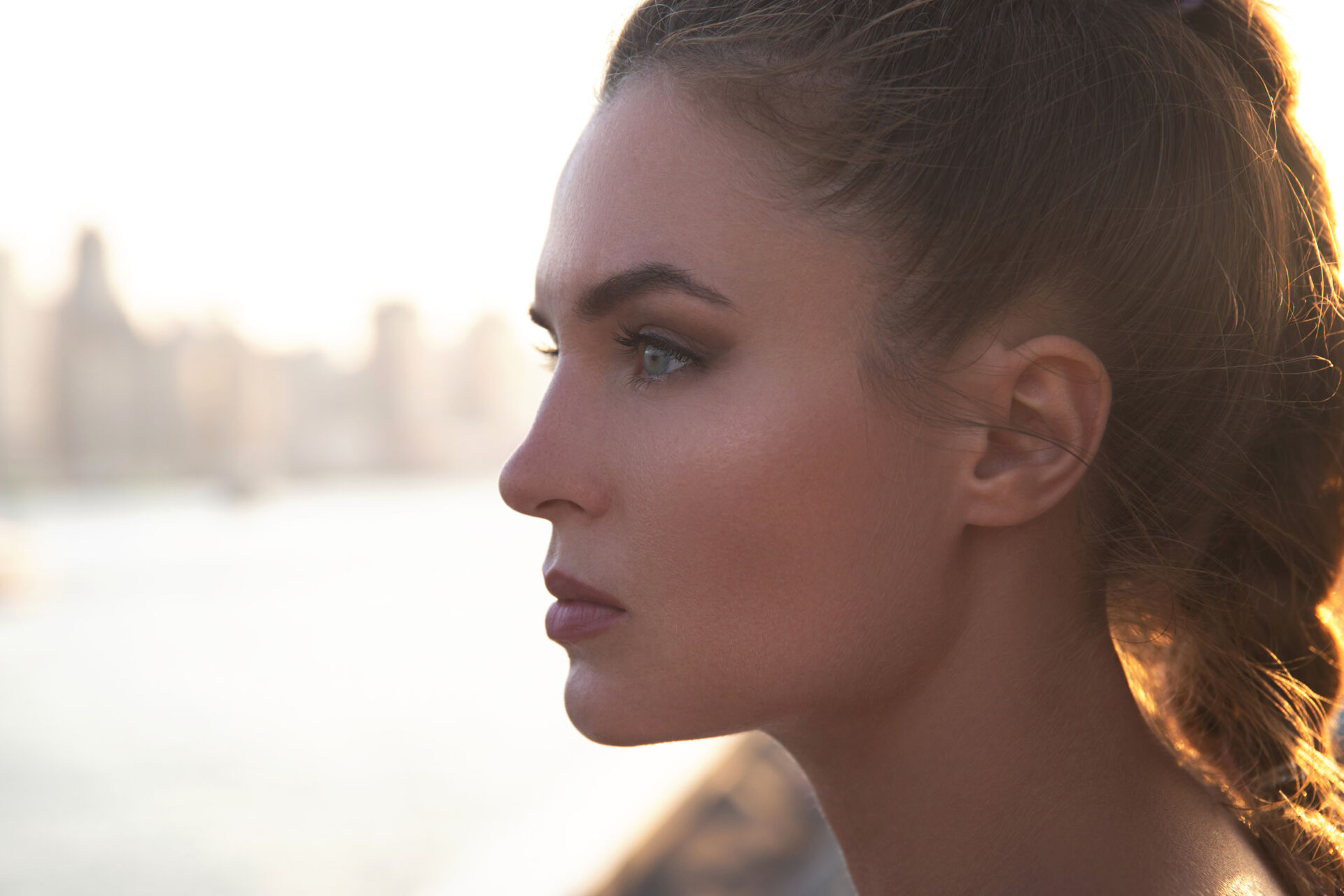
- your side profile
- the symmetry of your features
- the balance between your eyes, lips and chin
- the overall first impression you give
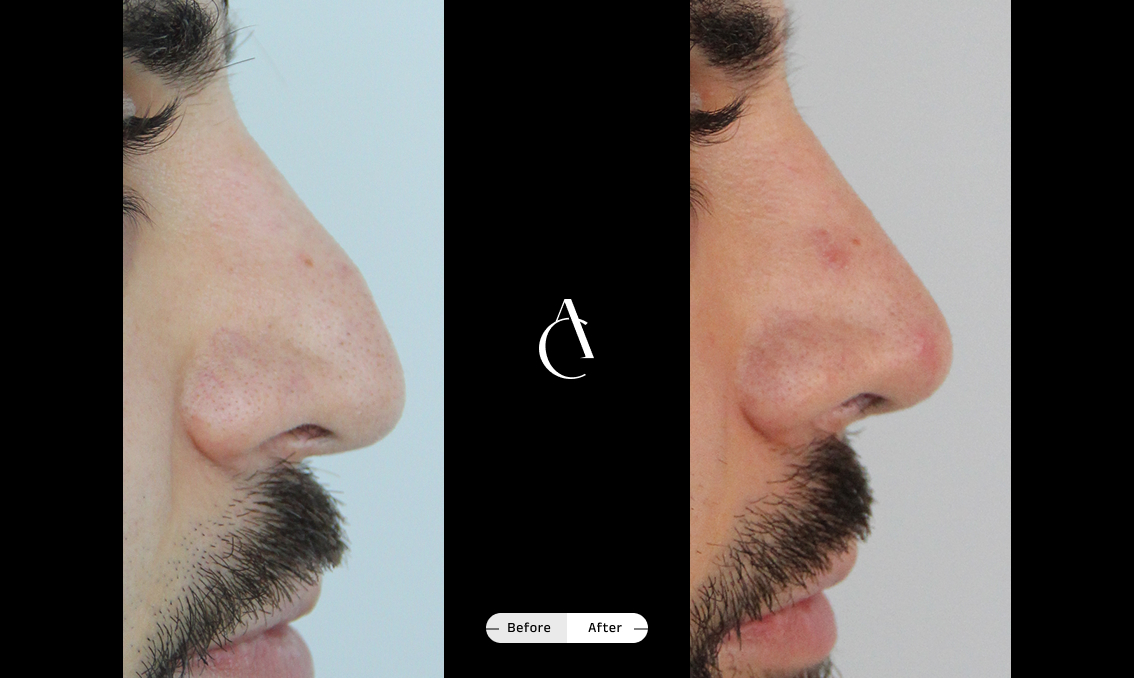
For example, reducing a dorsal hump can make your profile look smoother and your chin appear stronger, while refining a wide or drooping tip can make your face look more defined. Correcting asymmetry can make other features seem more even. Crucially, none of these features is actually altered – they simply appear more balanced once the nose complements them rather than dominating them.
It’s also worth understanding the difference between your profile and your front view, because rhinoplasty can affect each of them differently. A change that transforms your side profile, such as smoothing a pronounced bridge, may be barely noticeable head-on, while a refinement to the width or tip of your nose can be far more obvious from the front. Many patients focus on one view without realising how the other will change, which is why reviewing photographs from several angles with your surgeon beforehand is so valuable.
Will you still look like yourself after rhinoplasty?
This is the concern that stops many people from going ahead, so it deserves a clear answer: the goal of rhinoplasty is not to create a different face. A well-planned procedure is designed to preserve your identity while refining the one feature you’d like to change.
Modern rhinoplasty has moved away from the “one-size-fits-all” noses of the past. Instead, an experienced surgeon aims for results that complement your existing features, respect your natural characteristics and avoid overcorrection. Done well, the outcome tends to be subtle enough that people notice you look refreshed or more balanced without being able to say exactly why. You should still recognise yourself in the mirror – just a more harmonious version.
Having realistic expectations before surgery makes a real difference here. Rhinoplasty refines what’s already there rather than replacing it, so the more natural your goals, the more natural your result is likely to look. Bringing photographs of noses you like – and ones you don’t – gives your surgeon a clear sense of the direction you’re hoping for, while keeping the outcome in proportion with the rest of your face.
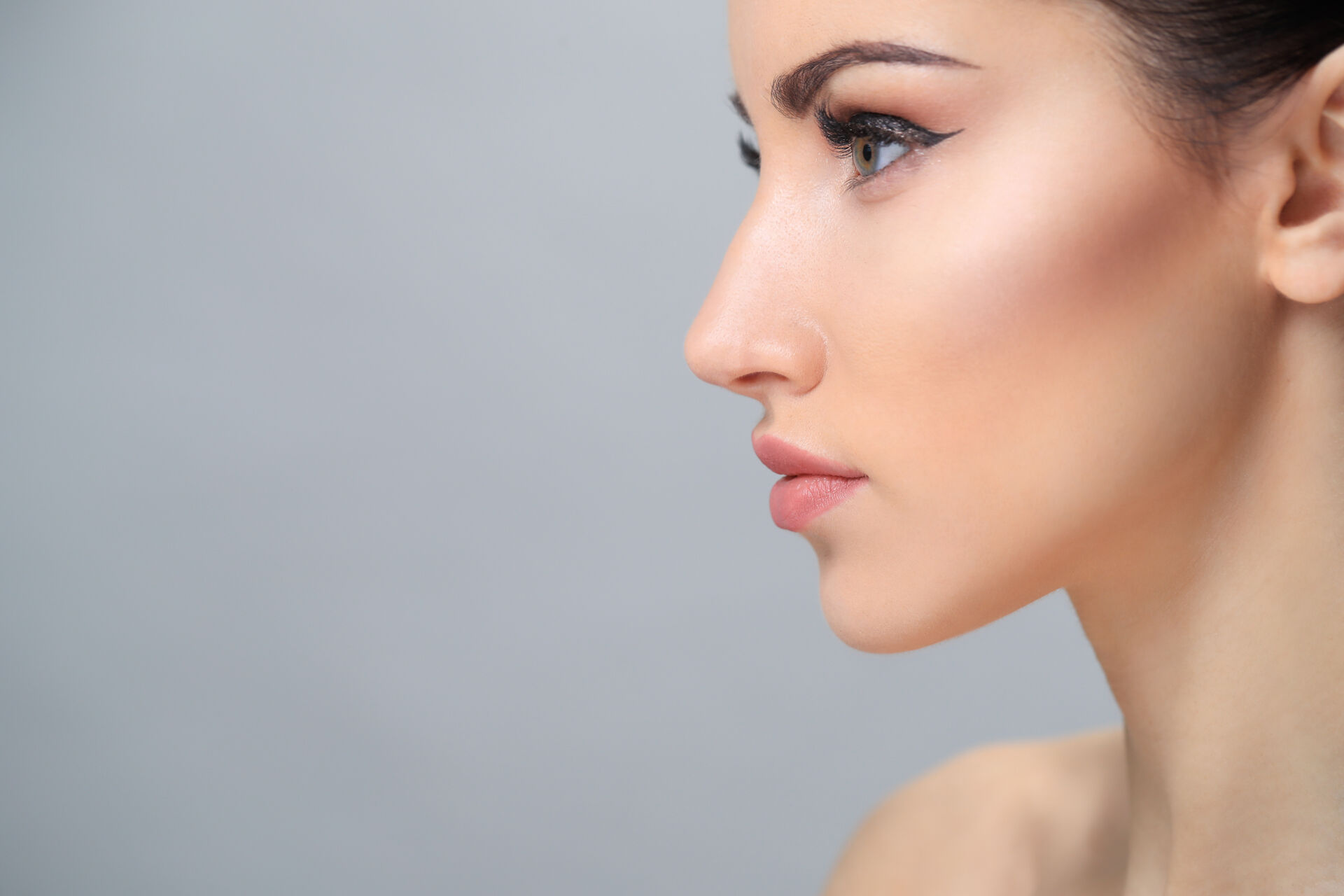
 Source: envato.com
Why your face may look different during recovery
It’s worth knowing that the face you see in the first weeks after surgery is not your final result. Early on, your appearance is heavily influenced by the normal effects of healing, including:
- swelling, particularly around the nose and cheeks
- bruising that gradually fades
- stiffness in the upper lip and surrounding tissues
- temporary changes to your facial expressions
- gradual refinement that continues over several months
Swelling can distort how your nose and face look for some time, and the tip in particular is often the last area to settle. This is why surgeons advise patience – the final outcome only emerges once healing is well advanced, which can take up to a year. For a fuller picture of what to expect, see our guide to rhinoplasty recovery time.
Which facial features seem to change after rhinoplasty?
It’s a common surprise for patients to feel that features other than their nose look different after surgery. In reality, rhinoplasty does not alter your:
- eyes
- cheeks
- forehead
- lips
What changes is perception. Improving the nose can make these features appear more prominent, more open or better balanced. A narrower bridge, for instance, can make the eyes seem brighter or more defined, simply because they’re no longer competing with a dominant nose. It’s a shift in proportion and emphasis rather than a physical change to those features themselves.
Can rhinoplasty make your face look smaller or slimmer?
Many people search for this specifically, hoping a nose job will slim their whole face. The honest answer is that rhinoplasty doesn’t reduce the size of your face – but it can create the impression of a slimmer, more balanced one. By refining a wide or prominent nose, surgery can improve the proportions of your face, and better proportions often read as a more delicate or streamlined appearance. It’s an optical effect driven by harmony, not an actual reduction in facial size. This is also why two people can have very similar surgery and perceive the change quite differently: it depends on their starting proportions and which view they tend to notice most.
Why some patients feel they look very different after surgery
Adjusting to a new nose is partly a physical process and partly a psychological one. Some patients feel they look dramatically different at first, even after a modest change, and there are several reasons for this:
- temporary swelling exaggerates the early appearance
- it takes time to get used to seeing a new reflection
- you may become more aware of your facial balance than before
- your face can look different in photographs than in the mirror
- emotional adjustment is a normal part of the process
It’s completely normal to need a little time to adapt, and most patients grow comfortable with their new appearance as the swelling settles and the result becomes their new normal.
How to achieve natural-looking rhinoplasty results
The difference between a nose that looks “done” and one that looks natural usually comes down to planning and expertise. Natural-looking results rely on:
- personalised surgical planning based on your unique face
- respecting your existing facial proportions
- preserving your ethnicity and individuality where appropriate
- avoiding generic, trend-driven noses that don’t suit everyone
A skilled facial plastic surgeon assesses the relationship between your nose and the rest of your face – your chin, cheeks, forehead, lips and eyes – rather than treating the nose in isolation. Preparing thoroughly beforehand matters too, and our guide on how to prepare for a rhinoplasty explains how to get ready for the best possible outcome.
Frequently asked questions about facial changes after rhinoplasty
Does rhinoplasty make you look like a different person?
No – not when it’s done well. The aim is to refine your nose while preserving your identity, so you should still look like yourself, only more balanced. Dramatic, unrecognisable changes are not the goal of modern rhinoplasty.
Why does my face look different after rhinoplasty?
In the early stages, swelling and bruising are usually responsible, and it also takes time to adjust to seeing a new reflection. As healing progresses, your face settles into its final, more harmonious appearance.
Can rhinoplasty improve facial harmony?
Yes. Because the nose is so central, refining it can bring the rest of your features into better balance, which is one of the main reasons people choose to have the procedure.
Does rhinoplasty change your smile?
It can affect your smile temporarily. Swelling and stiffness in the upper lip may make your smile feel tight for a short period, but this usually eases as the tissues relax. Permanent changes to your smile are uncommon when surgery is performed correctly.
Will people notice my rhinoplasty?
A subtle, well-planned rhinoplasty often prompts comments like “you look refreshed” rather than obvious remarks about surgery. Many patients find that people can tell something has changed without being able to pinpoint that it’s their nose.
Book a consultation with Dr. Cuno
If you’re wondering how rhinoplasty could change your appearance, the best way to find out is a personalised assessment. Dr. Cuno can evaluate your facial proportions, discuss your goals and explain how a tailored surgical approach can enhance your natural harmony while preserving what makes you look like you.
Book a consultation with Dr. Cuno at his Geneva clinic to talk through what’s realistic for your face and your goals.