Are you asleep during rhinoplasty?
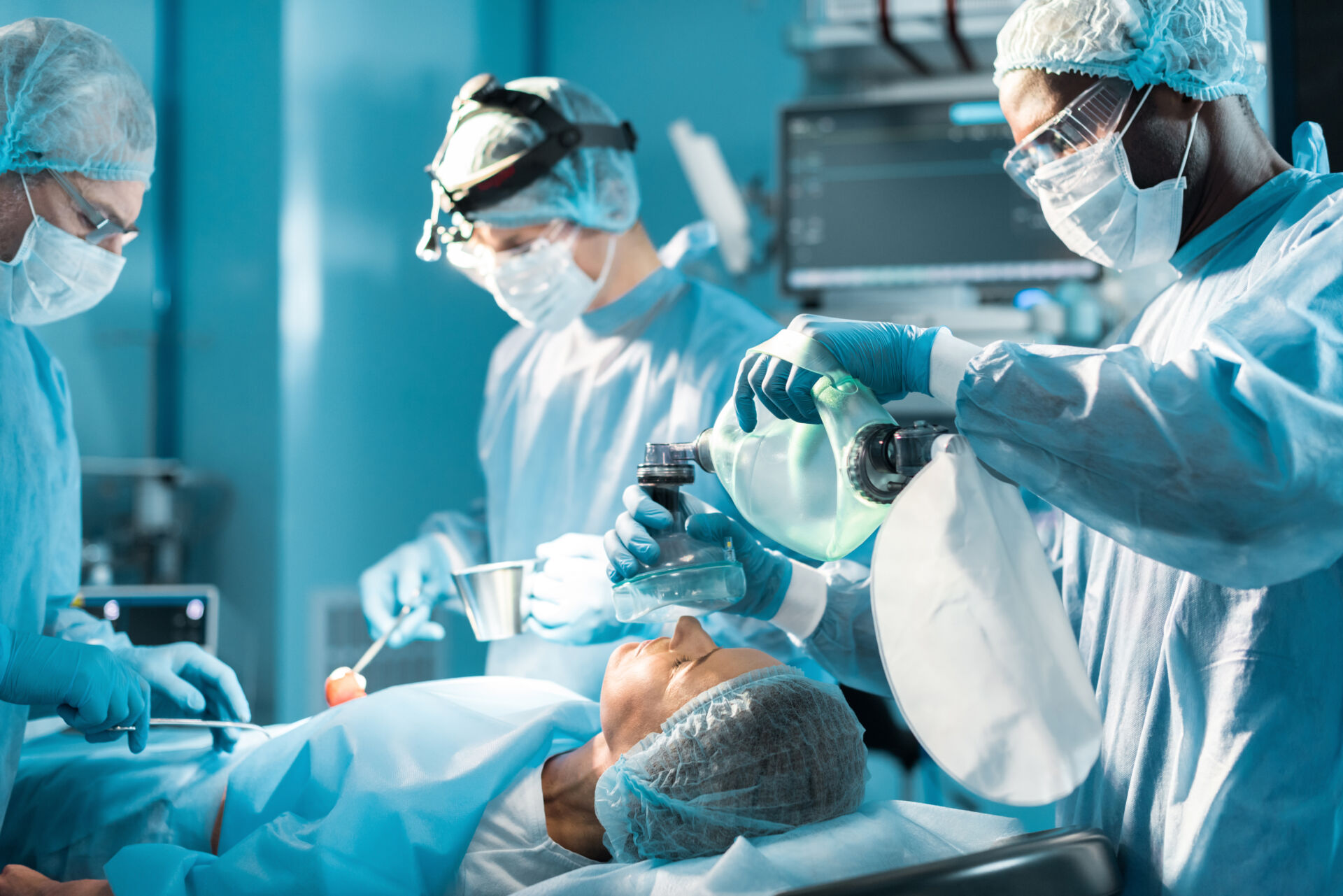
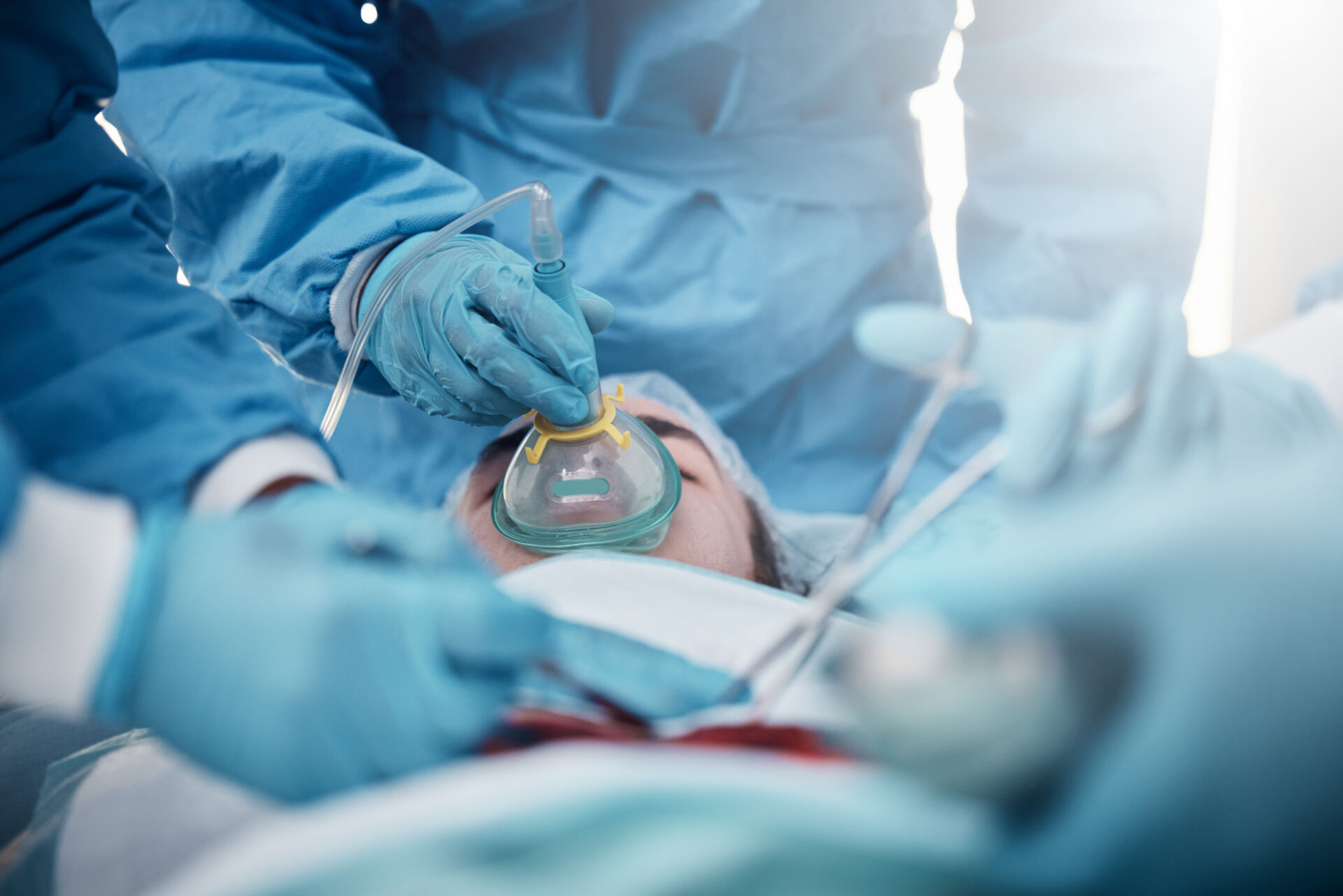
For most surgical rhinoplasties, yes – you are fully asleep or in deep sedation. This means that you’re usually not aware of the procedure at all and you’ll wake up when it’s all finished. Surgeons prefer this approach for several important reasons:
- Airway protection: your nose and airway are closely connected, and controlled breathing is essential during surgery.
- Bleeding control: stable anaesthesia helps maintain optimal blood pressure and reduces bleeding, which also improves visibility for your surgeon.
- Precision: rhinoplasty involves delicate bone and cartilage structures. A still, relaxed patient allows the surgeon to work with greater accuracy.
The idea of rhinoplasty while awake might sound more appealing if you prefer to feel in control, but most full nose job procedures are performed under deep sedation or general anaesthesia because this maximises both safety and results.
What type of anaesthesia is used for rhinoplasty?
The goal of anaesthesia for rhinoplasty isn’t about being “brave” – it’s about comfort, safety and allowing your surgeon to work precisely with the delicate structures in your nose.
There are several options for anaesthesia for rhinoplasty, and the choice depends on the complexity of surgery and the individual patient. These are:
- Local anaesthesia with light sedation
Your nose is numbed with injections, and you may also receive calming medication to help you relax. You’re technically awake for the operation, but you’ll be drowsy. - Deep sedation/Total Intravenous Anaesthesia (TIVA)
You’ll receive medication through a drip to keep you in a sleep-like state. You breathe on your own, but you’re not conscious of the procedure. - General anaesthesia
You are fully asleep, and your breathing is supported and monitored by an anaesthetist.
Can rhinoplasty be done with local anaesthesia only?
So, can you do rhinoplasty with local anesthesia? In very selected situations, yes – but it’s not standard practice.
Rhinoplasty under local anaesthesia may be considered for:
- Very small tip refinements
- Minor corrections or limited revisions
- Certain closed rhinoplasty procedures without major structural changes
However, there are important limits to what’s possible under a local anaesthetic. Local-only techniques are not suitable for:
- Significant bone reshaping
- Major structural support work
- Complex septal grafting
It’s also important to know that even when rhinoplasty surgery is carried out under a local anaesthetic, you’ll often be sedated to keep you calm. Completely awake surgery without any relaxation medication is rare.
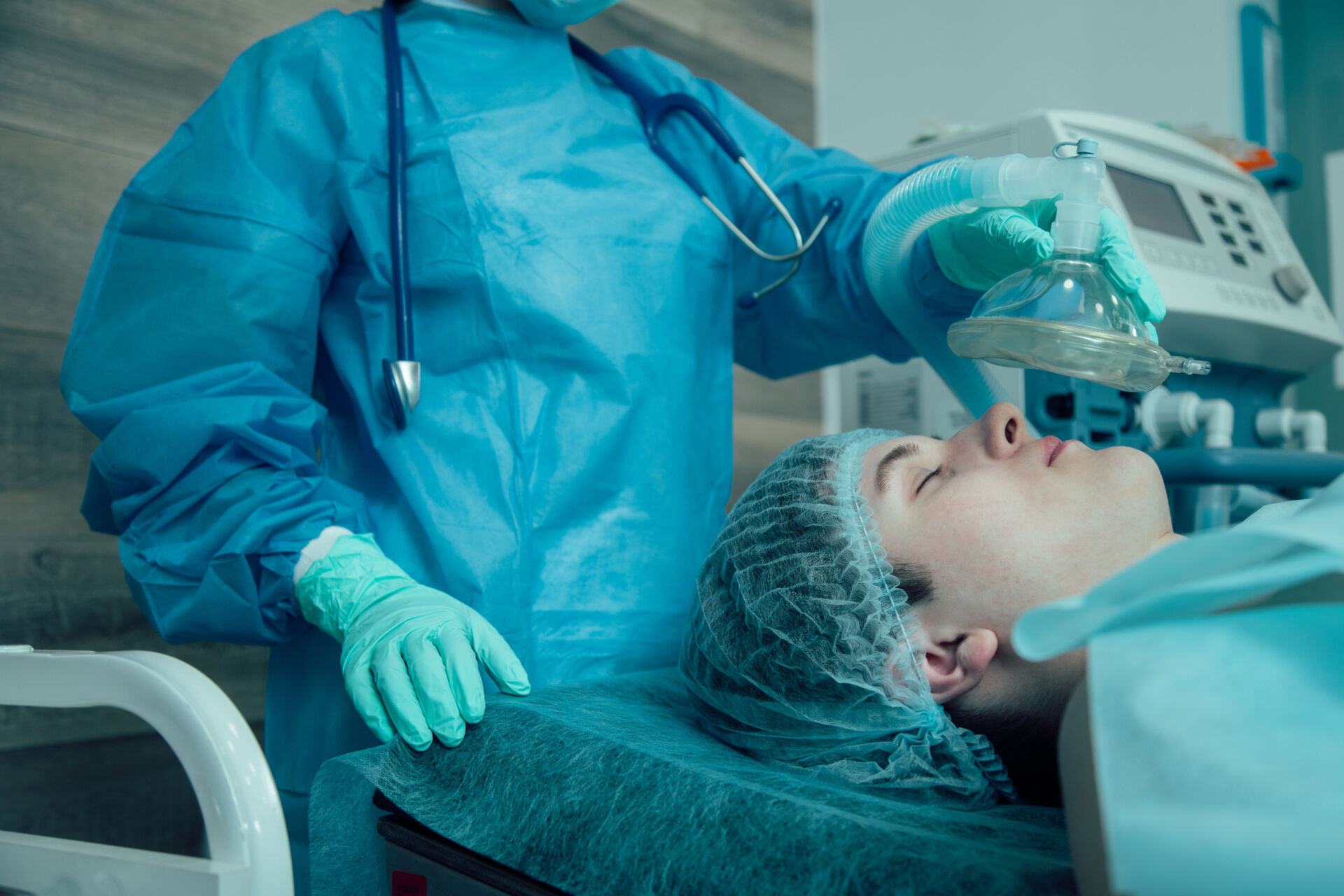
Images source: Envato
When is local anaesthesia not recommended for nose surgery?
In many situations, local anaesthesia alone is not the safest or most effective option. When considering what anaesthesia is used for rhinoplasty, the surgical complexity will be the most important factor. General anaesthesia or deep sedation are usually preferred for:
- Open structural rhinoplasty
- Combined functional and cosmetic surgery (septorhinoplasty)
- Revision rhinoplasty involving grafts or scar tissue
- Patients with high anxiety
- Longer procedures or complex nasal anatomy
Using general anaesthetic in these cases provides a more controlled surgical environment and reduces the stress you feel in this situation. General anaesthesia for rhinoplasty is therefore chosen primarily to protect your wellbeing and support surgical precision.
How your surgeon chooses the safest anaesthesia for your rhinoplasty
Your surgeon will make the choice between local, sedation or general anaesthesia carefully, and usually in consultation with an anaesthetist. Factors include:
- Your medical history
- Current medications
- Scope and duration of surgery
- Previous operations
- Anxiety levels
- Breathing or airway considerations
In Dr Cuno’s practice, anaesthesia planning is an important part of the consultation process. He will assess you individually to determine the safest and most appropriate approach, balancing your comfort, safety and surgical goals. During your consultation, you should feel comfortable asking questions such as:
- Will I be awake?
- What are the risks of each option?
- Will I feel pain?
- How will I feel afterwards (nausea, grogginess)?
Understanding your options and the recovery process will help you feel more confident going into surgery.
Is local anaesthesia for rhinoplasty the right choice for you?
Most full rhinoplasties are performed while you’re under deep sedation or general anaesthesia. Local anaesthesia rhinoplasty is possible, but only for very small, carefully selected procedures. Your comfort and safety, along with surgical accuracy, are more important than the idea of “staying awake”.
If you’re considering rhinoplasty and wondering about anaesthesia, the best next step is to book a consultation. Dr. Cuno will assess your nose, health and goals, and help you decide on the safest and most suitable anaesthesia plan for your surgery.
Images source: Envato